Coming soon
VIP
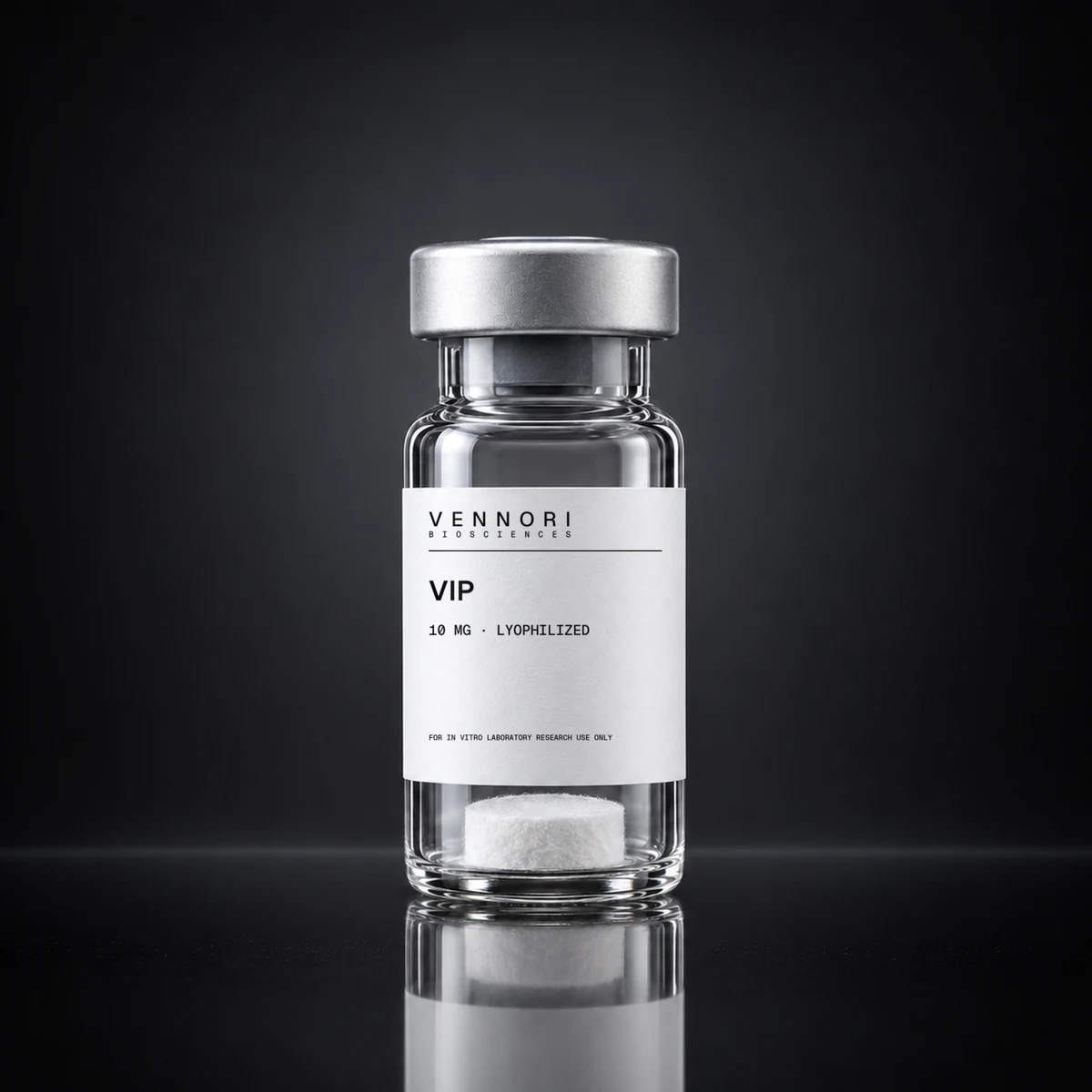
10mg · Single vial · Lyophilized powder
- Dose
- 10mg
- Pack size
- Single vial
- Form
- Lyophilized powder
- Storage
- 2–8°C
In vitro laboratory research use only · Not for human or veterinary use · Batch documented · Third-party tested · Ships from Canada
§ Research
Research · VIP
Overview
VIP is a 28-residue neuroendocrine signaling molecule of the secretin-glucagon family, first isolated from porcine small intestine in 1970 on the basis of its vasodilatory activity. It is C-terminally amidated and closely related in sequence to PACAP. VIP is widely distributed in central and peripheral neurons, enteric nerves, and immune cells. It serves as a reference ligand in studies of VPAC receptor pharmacology, smooth muscle relaxation, circadian regulation, and neuroimmune signaling. A synthetic form, aviptadil, has been investigated clinically.
Mechanism of action
VIP binds two class B G-protein-coupled receptors, VPAC1 and VPAC2, with high affinity, and the PACAP-preferring PAC1 receptor with lower affinity. Receptor activation couples predominantly to Gs, increasing intracellular cAMP and activating protein kinase A, with additional coupling to Gq-phospholipase C and calcium signaling in some tissues. Resulting effects include relaxation of vascular, bronchial, and gastrointestinal smooth muscle, stimulation of intestinal water and electrolyte secretion, and inhibition of pro-inflammatory cytokine production by macrophages and T cells. In the suprachiasmatic nucleus, VIP-VPAC2 signaling synchronizes circadian pacemaker neurons. Circulating VIP has a plasma half-life of only minutes due to rapid proteolysis, which has motivated stabilized analogs.
Key research findings
- 01
Rodent models of collagen-induced arthritis, colitis, and experimental autoimmune encephalomyelitis characterize VIP's immunomodulatory effects, including shifts toward regulatory T-cell responses.
- 02
Knockout studies of VIP and VPAC2 establish their roles in circadian rhythm synchronization in the suprachiasmatic nucleus.
- 03
Clinical studies of aviptadil have characterized pulmonary hemodynamic and respiratory endpoints in pulmonary arterial hypertension and COVID-19-associated respiratory failure.
- 04
VIP-secreting neuroendocrine tumors (VIPomas) provide a human model of chronic VIP excess, characterized by secretory diarrhea and hypokalemia.
Published references
Signal Transduction by VIP and PACAP Receptors
Immunology of VIP: a review and therapeutical perspectives
The information above is derived from published preclinical and clinical research. It is provided for educational purposes only and does not constitute medical advice, diagnosis, or treatment recommendations.