Coming soon
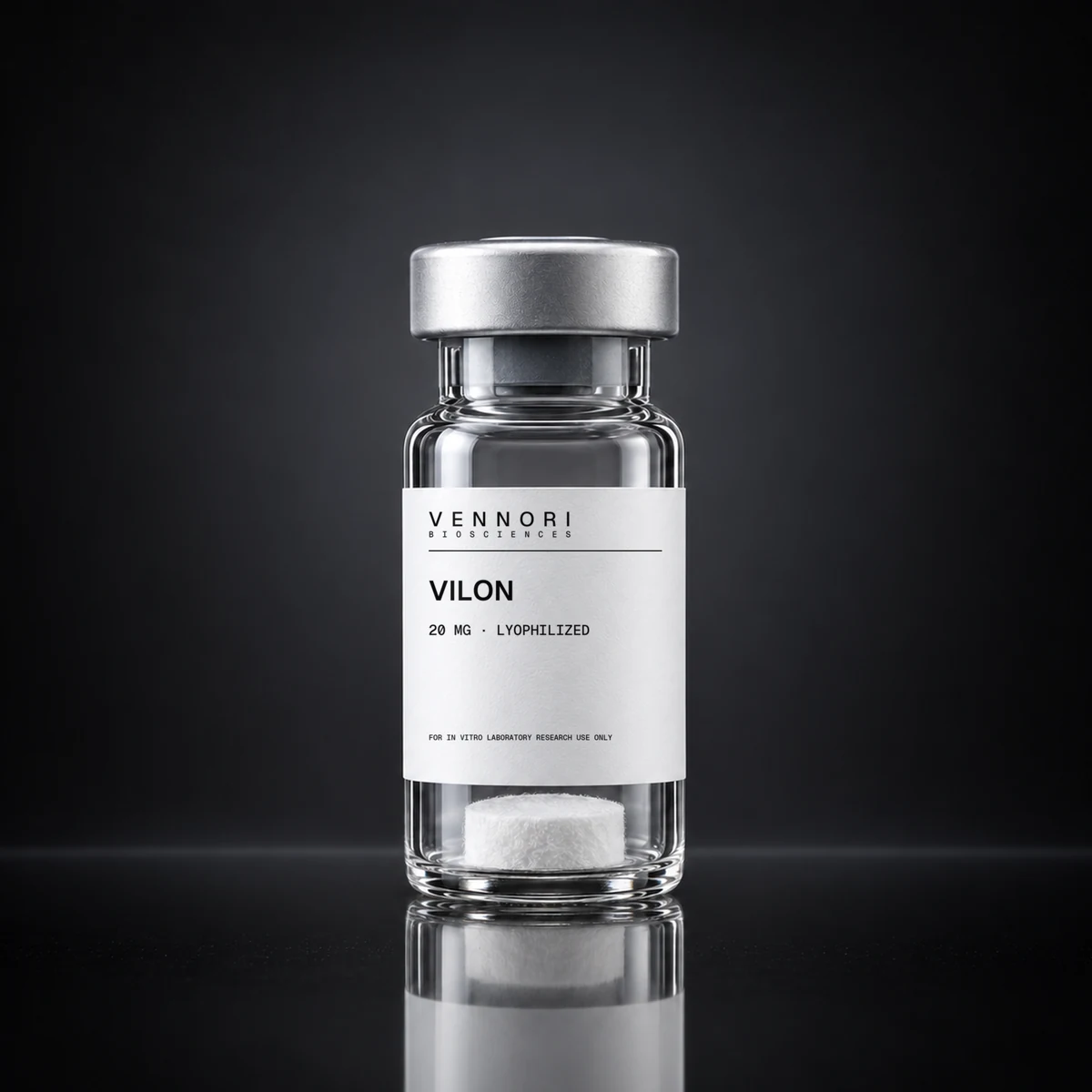
Vilon
20mg · Single vial · Lyophilized powder
- Dose
- 20mg
- Pack size
- Single vial
- Form
- Lyophilized powder
- Storage
- 2–8°C
In vitro laboratory research use only · Not for human or veterinary use · Batch documented · Third-party tested · Ships from Canada
§ Research
Research · Vilon
Overview
Vilon is a synthetic two-residue sequence (Lys-Glu, designated KE) described by Khavinson's group as a thymus-associated bioregulator. It is among the shortest compounds in the bioregulator series and has been studied in thymic, lymphoid, intestinal, and fibroblast models. Published work is concentrated in Russian-language gerontology and experimental biology journals, and much of it compares Vilon directly with Epithalon or with related short sequences from the same series. It has also been identified by the originating group as a component of the thymus-derived preparation thymalin.
Mechanism of action
The proposed mechanism involves direct modulation of gene expression and differentiation in immune and epithelial cells. In thymic cell cultures, the sequence and a related analog were reported to increase expression of the lymphocyte differentiation marker CD5 and to influence differentiation of T-cell precursors toward CD4-positive helper and CD8-positive cytotoxic subsets. Additional reports describe effects on thymocyte proliferation, signal transduction along the sphingomyelin pathway, and reduced synthesis of inflammatory mediators such as IL-1 and NF-kappa-B in aging fibroblasts. A related two-residue analog was studied in parallel, and the group has proposed that such short sequences act as signaling molecules that modulate differentiation programs rather than as receptor ligands in the classical sense.
Key research findings
- 01
Immunohistochemical and morphometric studies in rats exposed to whole-body gamma irradiation reported stimulated thymocyte proliferation and intestinal stem cell proliferative potential during post-radiation recovery.
- 02
Human and rat thymic cell culture studies characterized increased CD5 expression and shifts in T-cell precursor differentiation.
- 03
Human skin fibroblast studies during replicative aging reported reduced IL-1, NF-kappa-B, and TGF-beta synthesis and increased sirtuin-6 synthesis.
- 04
Primary research is published in Russian-language journals and remains uncharacterized in Western clinical databases.
Published references
Immunohistochemical and morphometric analysis of effects of vilon and epithalon on functional morphology of radiosensitive organs
Immunomodulating effects of Vilon and its analogue in the culture of human and animal thymus cells
The information above is derived from published preclinical and clinical research. It is provided for educational purposes only and does not constitute medical advice, diagnosis, or treatment recommendations.