Coming soon
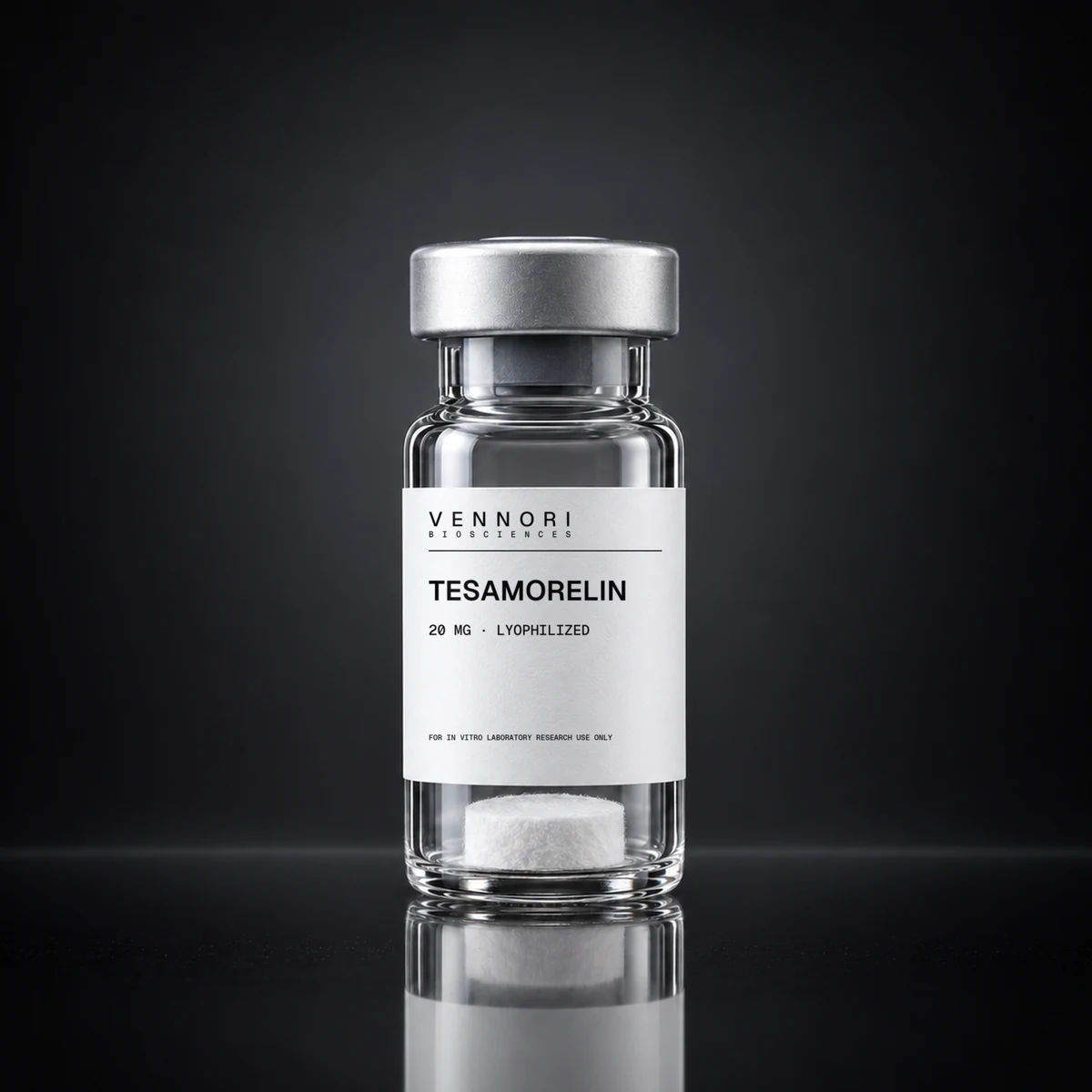
Tesamorelin
20mg · Single vial · Lyophilized powder
- Dose
- 20mg
- Pack size
- Single vial
- Form
- Lyophilized powder
- Storage
- 2–8°C
In vitro laboratory research use only · Not for human or veterinary use · Batch documented · Third-party tested · Ships from Canada
§ Research
Research · Tesamorelin
Overview
Tesamorelin is a synthetic analog of the full 44-amino-acid human growth hormone-releasing hormone, modified by attachment of a trans-3-hexenoyl group to the N-terminal tyrosine. This modification confers resistance to DPP-4 cleavage while preserving GHRH receptor potency. Developed by Theratechnologies researchers, tesamorelin is approved for clinical use in several jurisdictions and is studied as a reference stabilized GHRH analog in research on visceral adipose tissue and the somatotropic axis.
Mechanism of action
Activates the GHRH receptor, a class B G-protein-coupled receptor on anterior pituitary somatotrophs. Receptor binding stimulates Gs-coupled adenylyl cyclase, increasing cAMP and protein kinase A activity, which drives growth hormone gene transcription and pulsatile hormone release. Elevated growth hormone increases hepatic IGF-1 production and acts on adipocytes via JAK2/STAT5 signaling to promote lipolysis, with visceral adipose depots showing particular sensitivity. Because tesamorelin acts at the hypothalamic-pituitary level, physiological feedback by somatostatin and IGF-1 is preserved, which distinguishes its profile from direct administration of recombinant growth hormone. The N-terminal hexenoyl modification extends its stability in plasma compared with unmodified GHRH.
Key research findings
- 01
Randomized phase III trials in participants with HIV-associated abdominal fat accumulation characterized reductions in visceral adipose tissue measured by CT, with preservation of subcutaneous adipose tissue.
- 02
Clinical studies characterized increases in IGF-1 concentrations alongside changes in triglycerides and total-to-HDL cholesterol ratio during exposure.
- 03
Follow-up studies documented that visceral adipose tissue changes reverted after discontinuation, consistent with a pharmacological rather than persistent effect.
- 04
Imaging studies in HIV cohorts have characterized effects on liver fat content and adipose tissue quality, independent of changes in total fat quantity.
Published references
Metabolic effects of a growth hormone-releasing factor in patients with HIV
Tesamorelin
The information above is derived from published preclinical and clinical research. It is provided for educational purposes only and does not constitute medical advice, diagnosis, or treatment recommendations.