Coming soon
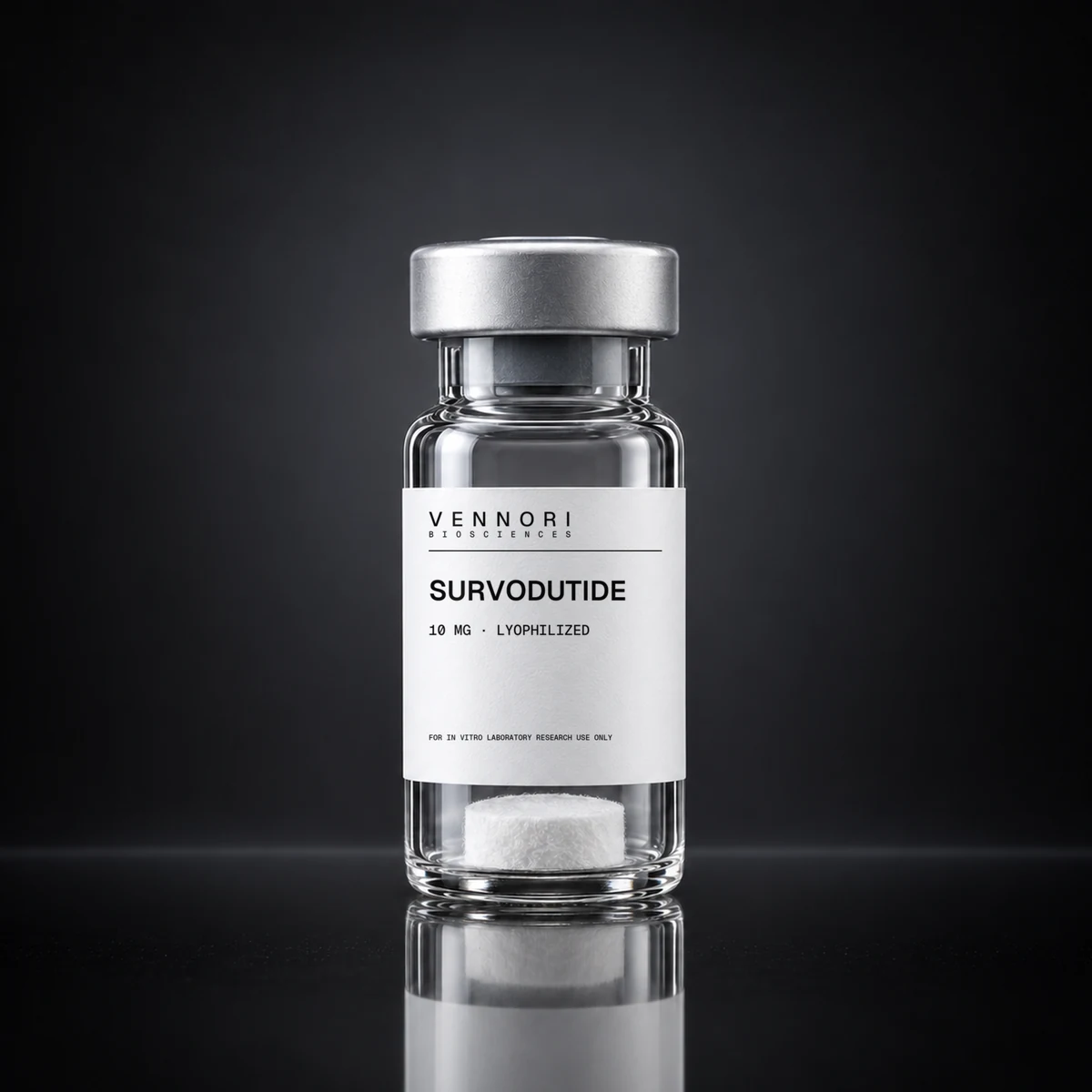
Survodutide
10mg · Single vial · Lyophilized powder
- Dose
- 10mg
- Pack size
- Single vial
- Form
- Lyophilized powder
- Storage
- 2–8°C
In vitro laboratory research use only · Not for human or veterinary use · Batch documented · Third-party tested · Ships from Canada
§ Research
Research · Survodutide
Overview
Survodutide (BI 456906) is an investigational dual agonist of the glucagon receptor and the GLP-1 receptor, first described by Boehringer Ingelheim researchers in collaboration with Zealand Pharma. The sequence is based on a glucagon-derived backbone and is acylated with a fatty acid side chain that supports albumin binding and an extended half-life. It is in late-stage clinical development and is studied as a reference compound for combined glucagon and GLP-1 receptor agonism, with particular attention to liver-related endpoints.
Mechanism of action
Survodutide activates the glucagon receptor and the GLP-1 receptor, with a receptor potency profile that gives glucagon receptor engagement a greater role than in many other dual agonists. GLP-1 receptor activation stimulates glucose-dependent insulin secretion, delays gastric emptying, and reduces food intake through central pathways, including circumventricular organs of the brain. Glucagon receptor activation in hepatocytes increases fatty acid oxidation and amino acid turnover and is associated with increased energy expenditure. The hepatic component of this profile underlies research interest in steatotic liver disease models.
Key research findings
- 01
Preclinical pharmacology studies in rodent models characterized reductions in food intake and body weight together with increased energy expenditure attributed to glucagon receptor engagement.
- 02
Neuroanatomical studies in rodents indicate that the compound acts through circumventricular organs and activates brain regions associated with appetite regulation.
- 03
A phase 2 randomized trial in participants with metabolic dysfunction-associated steatohepatitis (MASH) and fibrosis characterized histological endpoints, including resolution of steatohepatitis.
- 04
Phase 3 trials (SYNCHRONIZE program) have characterized body weight, hepatic fat, and cardiometabolic endpoints, with gastrointestinal events as the most frequently reported adverse events.
Published references
BI 456906: Discovery and preclinical pharmacology of a novel GCGR/GLP-1R dual agonist with robust anti-obesity efficacy
A Phase 2 Randomized Trial of Survodutide in MASH and Fibrosis
The information above is derived from published preclinical and clinical research. It is provided for educational purposes only and does not constitute medical advice, diagnosis, or treatment recommendations.