Coming soon
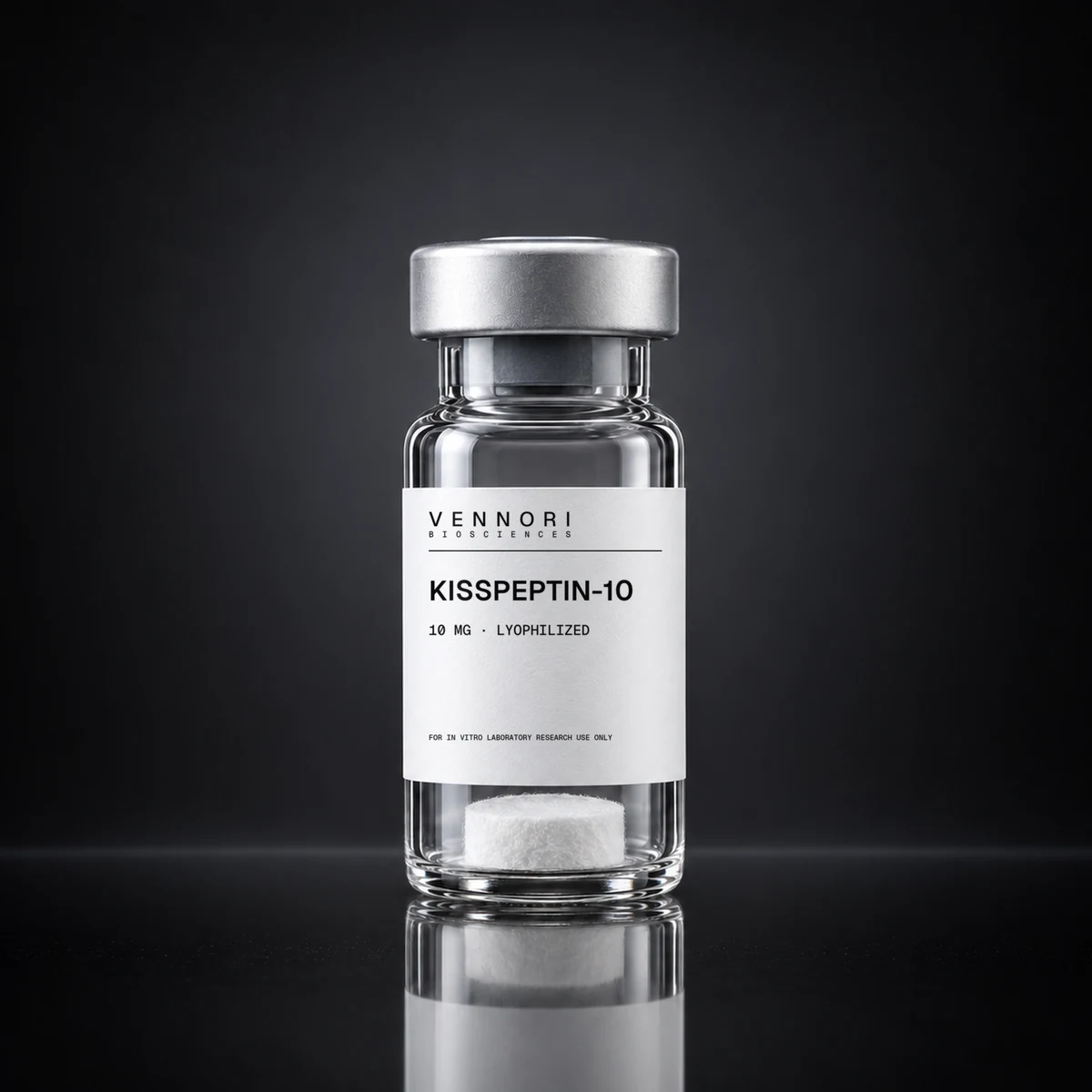
Kisspeptin-10
10mg · Single vial · Lyophilized powder
- Dose
- 10mg
- Pack size
- Single vial
- Form
- Lyophilized powder
- Storage
- 2–8°C
In vitro laboratory research use only · Not for human or veterinary use · Batch documented · Third-party tested · Ships from Canada
§ Research
Research · Kisspeptin-10
Overview
Kisspeptin-10 is the 10-residue C-terminal fragment of kisspeptin, the family of products encoded by the KISS1 gene. Longer endogenous isoforms (kisspeptin-54, -14, and -13) share this C-terminal sequence, which carries the Arg-Phe-amide motif required for receptor activation. Kisspeptin-10 is the shortest fragment retaining full agonist activity at the kisspeptin receptor and is widely used as a reference ligand in reproductive neuroendocrinology research. The kisspeptin system was identified as a gatekeeper of the reproductive axis after inactivating receptor mutations were linked to absent or delayed puberty in humans and mice, and the fragment has since been used extensively to probe hypothalamic control of gonadotropin secretion.
Mechanism of action
Activates the kisspeptin receptor (KISS1R, formerly GPR54), a Gq/11-coupled G-protein-coupled receptor expressed on gonadotropin-releasing hormone (GnRH) neurons of the hypothalamus. Receptor activation stimulates phospholipase C, generating inositol trisphosphate and diacylglycerol, mobilizing intracellular calcium, and depolarizing GnRH neurons. The resulting GnRH release into the hypophyseal portal circulation drives pituitary secretion of luteinizing hormone (LH) and follicle-stimulating hormone. Kisspeptin neurons in the arcuate nucleus, co-expressing neurokinin B and dynorphin, are proposed to form a core component of the GnRH pulse generator.
Key research findings
- 01
Human genetic studies (2003) identified loss-of-function mutations in GPR54 in individuals with hypogonadotropic hypogonadism, establishing the receptor as a regulator of pubertal onset.
- 02
Clinical studies in healthy men (2011) characterized dose-dependent increases in serum LH and LH pulse frequency following kisspeptin-10 exposure.
- 03
Preclinical rodent and primate studies characterize robust gonadotropin responses and desensitization of the axis under continuous receptor stimulation.
- 04
Established as a reference agonist in KISS1R binding, calcium-signaling, and GnRH neuron electrophysiology studies.
Published references
Kisspeptin-10 is a potent stimulator of LH and increases pulse frequency in men
The GPR54 gene as a regulator of puberty
The information above is derived from published preclinical and clinical research. It is provided for educational purposes only and does not constitute medical advice, diagnosis, or treatment recommendations.