Coming soon
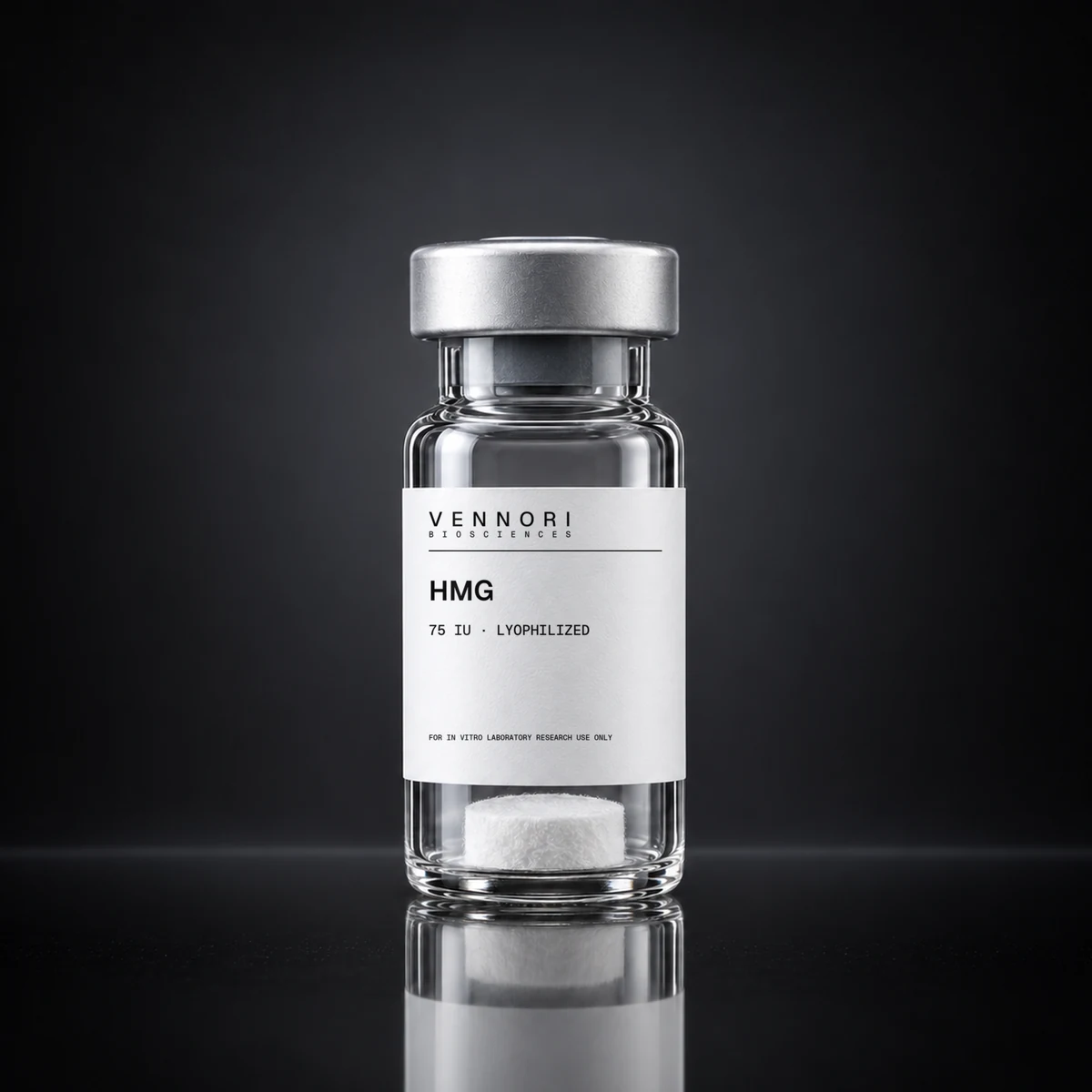
HMG
75iu · Single vial · Lyophilized powder
- Dose
- 75iu
- Pack size
- Single vial
- Form
- Lyophilized powder
- Storage
- 2–8°C
In vitro laboratory research use only · Not for human or veterinary use · Batch documented · Third-party tested · Ships from Canada
§ Research
Research · HMG
Overview
Human menopausal gonadotropin (hMG), also known as menotropins, is a gonadotropin preparation extracted and purified from the urine of postmenopausal women, in whom circulating gonadotropin concentrations are elevated. It contains both follicle-stimulating hormone (FSH) and luteinizing hormone (LH) bioactivity; in highly purified preparations, much of the LH activity is contributed by human chorionic gonadotropin. Both FSH and LH are heterodimeric glycoproteins sharing a common alpha subunit and distinguished by hormone-specific beta subunits. hMG is widely used as a comparator in gonadotropin pharmacology research, particularly in studies contrasting urinary-derived and recombinant gonadotropin preparations and their glycoform composition.
Mechanism of action
The FSH component binds the FSH receptor, a G-protein-coupled receptor on ovarian granulosa and testicular Sertoli cells, activating Gs-cAMP-protein kinase A signaling that drives follicular development and aromatase expression. The LH-activity component binds the luteinizing hormone/choriogonadotropin receptor on theca and Leydig cells, stimulating androgen synthesis. Under the two-cell, two-gonadotropin model, theca-derived androgens serve as substrate for granulosa-cell aromatization to estradiol, so the combined FSH and LH activity of hMG supports both steps of follicular steroidogenesis.
Key research findings
- 01
Established as a urinary-derived reference preparation in comparative studies of FSH and LH receptor activity.
- 02
Meta-analyses of randomized trials (2010) have compared highly purified hMG with recombinant FSH in assisted reproduction studies across follicular and oocyte-yield endpoints.
- 03
A Cochrane systematic review (2011) characterized recombinant versus urinary gonadotropin preparations for ovarian stimulation, reporting comparable live-birth outcomes across products.
- 04
Analytical studies document batch-level variation in the FSH-to-LH activity ratio, glycoform distribution, and hCG content of urinary preparations, which complicates direct comparison with recombinant products.
Published references
Clinical efficacy of highly purified hMG versus recombinant FSH in IVF/ICSI cycles: a meta-analysis
Recombinant versus urinary gonadotrophin for ovarian stimulation in assisted reproductive technology cycles
The information above is derived from published preclinical and clinical research. It is provided for educational purposes only and does not constitute medical advice, diagnosis, or treatment recommendations.