Certivos verified
Janoshik Analytical
Independent Analysis
- Purity
- 95.25%
- Test date
- 2026-06-05
Q2B4FWSJGDMY→ View certificate
This site supplies research compounds and laboratory materials for in vitro research only. Not for human or veterinary use.
I confirm I am 21 years of age or older and that any purchase is for laboratory research use only.
UP TO 30% OFF Retatrutide · Semaglutide · Tirzepatide — Limited TimeShop now
Coming soon
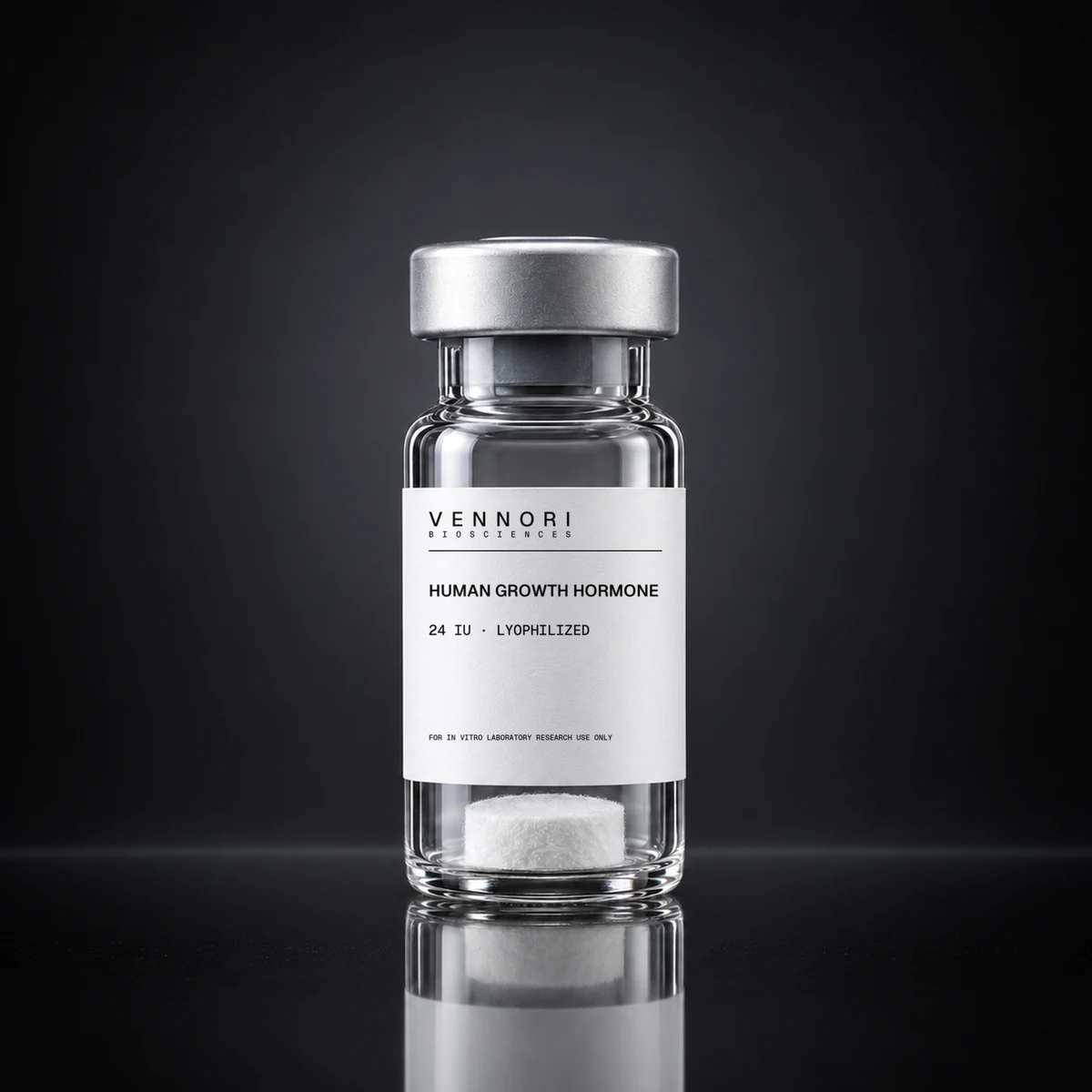
24iu · Single vial / 10-vial kit · Lyophilized powder
In vitro laboratory research use only · Not for human or veterinary use · Batch documented · Third-party tested · Ships from Canada
§ Verification — Batch 2026-05
Janoshik Analytical
Independent Analysis
Certificates are issued and hosted by Certivos.
§ Research
Human growth hormone (somatropin) is a 191-amino-acid, 22 kDa single-chain protein containing two intramolecular disulfide bonds, identical in sequence to the predominant pituitary isoform. Recombinant production in Escherichia coli was first reported by Genentech researchers in 1979, replacing cadaveric pituitary extraction as the source material. Recombinant somatropin is approved for clinical use in several jurisdictions and serves as a reference ligand in growth hormone receptor and somatotropic axis research.
Binds the growth hormone receptor, a class I cytokine receptor expressed in liver, skeletal muscle, adipose tissue, and bone. A single hormone molecule engages two pre-formed receptor chains through two distinct binding sites, inducing a conformational rearrangement that activates receptor-associated JAK2 tyrosine kinase. JAK2 phosphorylates STAT5, which translocates to the nucleus and drives transcription of target genes including hepatic IGF-1, IGFBP-3, and the acid-labile subunit. Parallel MAPK/ERK and PI3K/Akt cascades mediate metabolic actions, including lipolytic signaling in adipocytes and modulation of insulin sensitivity. Circulating IGF-1 provides negative feedback at the hypothalamus and pituitary through somatostatin release.
Structural and biophysical studies of the hormone-receptor complex established the sequential two-site dimerization model now used as a template for class I cytokine receptor activation.
Recombinant expression studies demonstrated that bacterially produced somatropin is biologically equivalent to the pituitary-derived hormone in standard bioassays.
Clinical studies in growth hormone deficient subjects have characterized dose-dependent changes in serum IGF-1, body composition, lipid profiles, and bone turnover markers.
Pharmacokinetic studies document a short plasma half-life measured in minutes after intravenous exposure, with downstream IGF-1 elevation persisting considerably longer than circulating hormone levels.
Direct expression in Escherichia coli of a DNA sequence coding for human growth hormone
The Growth Hormone Receptor: Mechanism of Receptor Activation, Cell Signaling, and Physiological Aspects
The information above is derived from published preclinical and clinical research. It is provided for educational purposes only and does not constitute medical advice, diagnosis, or treatment recommendations.