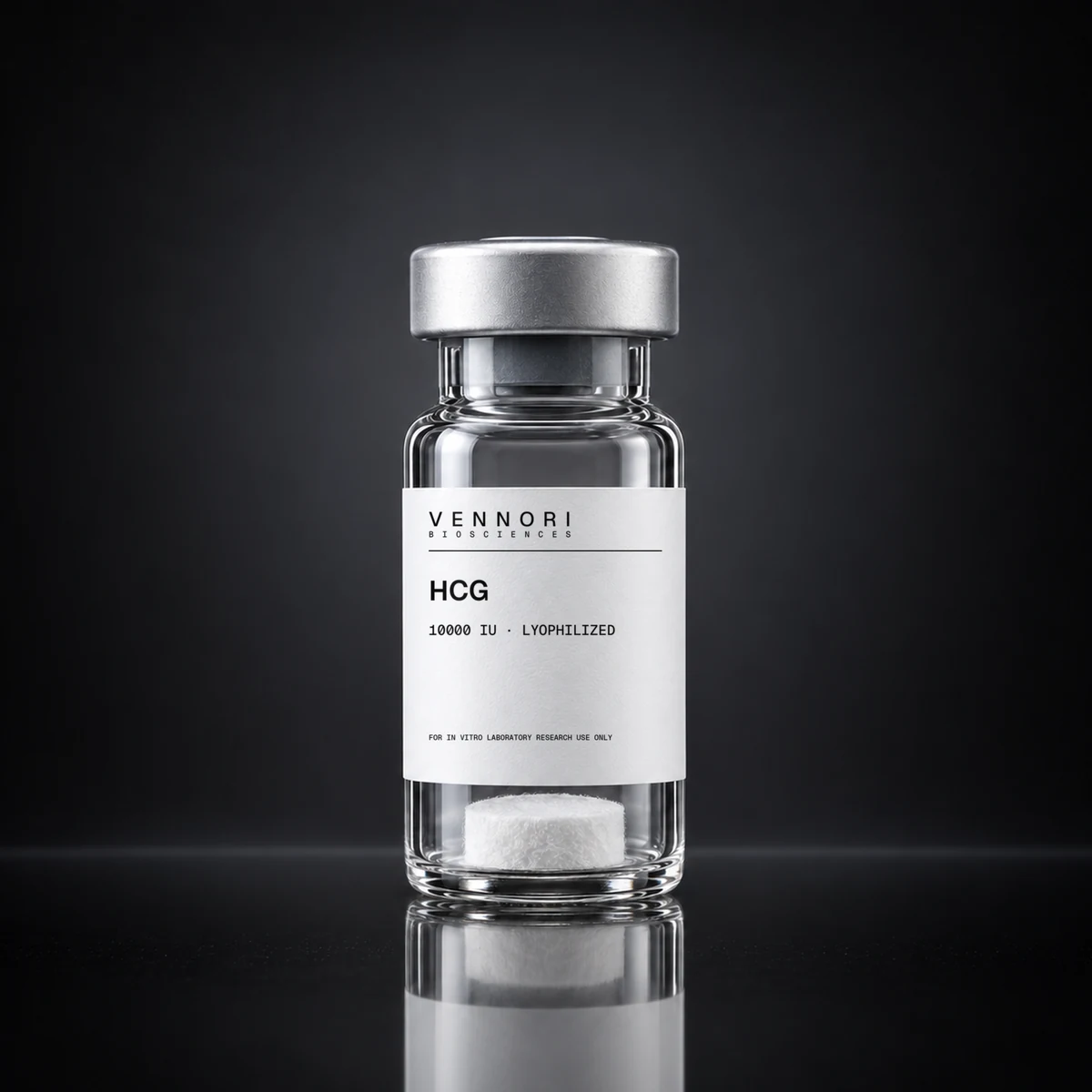
Coming soon
HCG
10000iu · Single vial · Lyophilized powder
- Dose
- 10000iu
- Pack size
- Single vial
- Form
- Lyophilized powder
- Storage
- 2–8°C
In vitro laboratory research use only · Not for human or veterinary use · Batch documented · Third-party tested · Ships from Canada
§ Research
Research · HCG
Overview
Human chorionic gonadotropin (hCG) is a heterodimeric glycoprotein hormone produced primarily by placental syncytiotrophoblast cells. It consists of an alpha subunit shared with luteinizing hormone (LH), follicle-stimulating hormone, and thyroid-stimulating hormone, and a hormone-specific beta subunit. The hCG beta subunit carries a C-terminal extension bearing multiple O-linked glycans, which distinguishes it structurally from LH and confers a substantially longer circulating half-life. It is available as urinary-derived and recombinant preparations and serves as a reference ligand in gonadotropin receptor pharmacology. Because of its structural and functional overlap with LH, it is also used experimentally as a stable LH-receptor agonist in steroidogenesis assays.
Mechanism of action
Binds the luteinizing hormone/choriogonadotropin receptor (LHCGR), a G-protein-coupled receptor expressed on testicular Leydig cells, ovarian theca and luteal cells, and other tissues. Receptor activation couples primarily to Gs, increasing intracellular cAMP and protein kinase A activity, which upregulates steroidogenic enzymes and the steroidogenic acute regulatory protein. Although hCG and LH share a receptor, comparative studies indicate differences in receptor binding kinetics and downstream signaling bias, with hCG favoring cAMP-driven steroidogenesis and LH showing relatively greater ERK and Akt pathway activation.
Key research findings
- 01
Established as a reference agonist in LHCGR binding and signaling studies across cellular and animal models.
- 02
Comparative in vitro studies characterize distinct intracellular signaling profiles for hCG and LH despite their shared receptor.
- 03
Clinical pharmacology studies in healthy men have compared single- and multi-dose exposure and testosterone responses between recombinant and urinary hCG preparations.
- 04
Physiological studies document its role in sustaining corpus luteum progesterone production during early pregnancy, before steroidogenesis transitions to the placenta.
Published references
Luteinizing hormone and human chorionic gonadotropin: origins of difference
Single and multi-dose pharmacology of recombinant and urinary human chorionic gonadotrophin in men
The information above is derived from published preclinical and clinical research. It is provided for educational purposes only and does not constitute medical advice, diagnosis, or treatment recommendations.