Coming soon
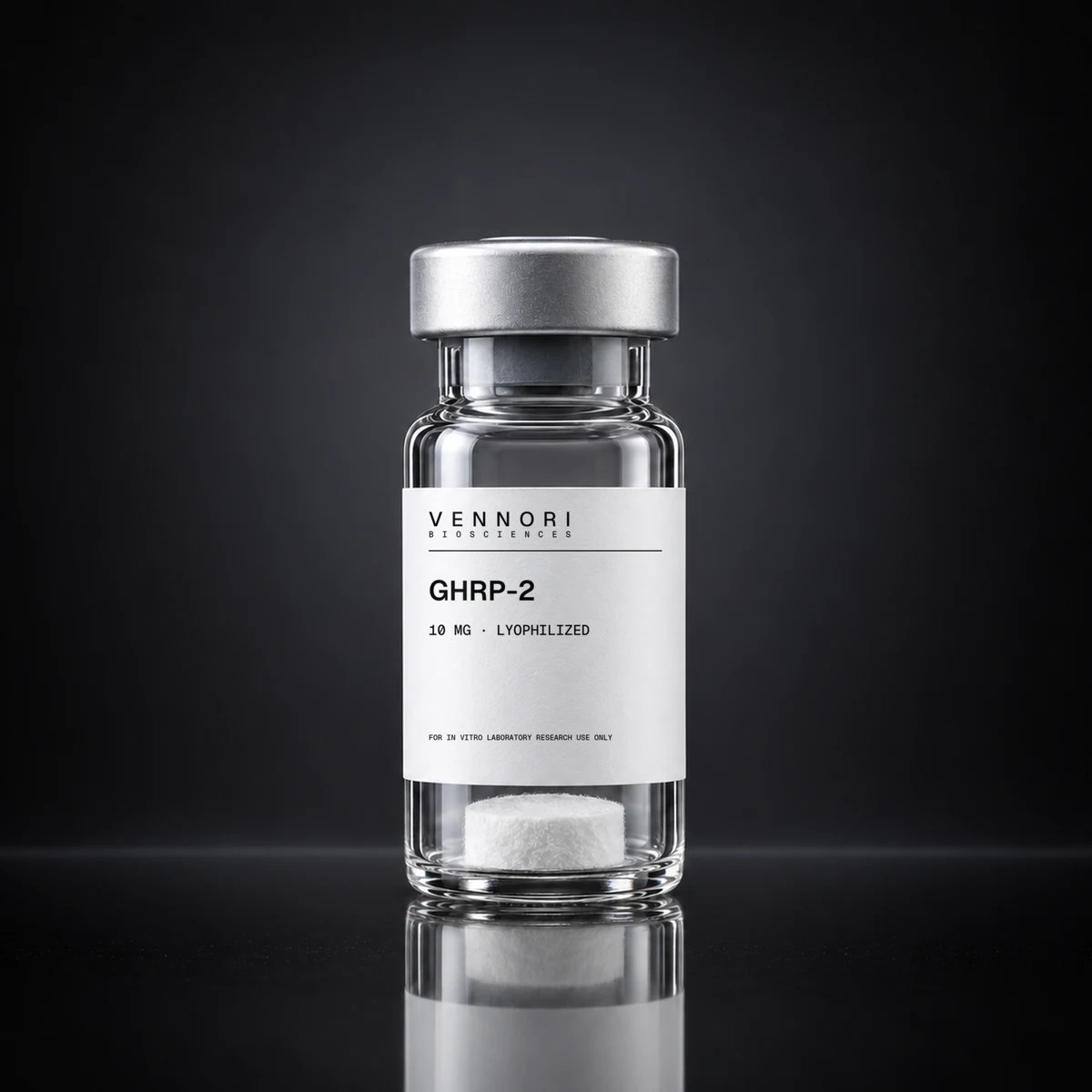
GHRP-2
10mg · Single vial · Lyophilized powder
- Dose
- 10mg
- Pack size
- Single vial
- Form
- Lyophilized powder
- Storage
- 2–8°C
In vitro laboratory research use only · Not for human or veterinary use · Batch documented · Third-party tested · Ships from Canada
§ Research
Research · GHRP-2
Overview
GHRP-2 (pralmorelin; D-Ala-D-2-Nal-Ala-Trp-D-Phe-Lys-NH2) is a synthetic six-residue growth hormone secretagogue developed in the GHRP series originated by Cyril Bowers and colleagues. It is among the most potent compounds in its class, with greater growth hormone-releasing activity than GHRP-6 in comparative studies. GHRP-2 has been examined in Japan in diagnostic research on pituitary growth hormone reserve and serves as a reference ghrelin receptor agonist in endocrine research.
Mechanism of action
Activates the growth hormone secretagogue receptor type 1a (GHS-R1a), the ghrelin receptor, expressed in the anterior pituitary, hypothalamus, and peripheral tissues. Receptor engagement couples to Gq/11, triggering phospholipase C activation and intracellular calcium mobilization in somatotrophs. At the hypothalamic level it stimulates GHRH release and opposes somatostatin action, which explains its synergy with GHRH. Unlike more selective agonists, GHRP-2 also produces moderate increases in ACTH, cortisol, and prolactin. Receptor activation in hypothalamic feeding circuits is associated with orexigenic signaling resembling that of endogenous ghrelin. Receptor expression in skeletal and cardiac muscle supports additional direct peripheral actions characterized in vitro.
Key research findings
- 01
Clinical studies of chronic administration characterized sustained growth hormone and IGF-1 responses and documented interrelationships between GHRP-2, endogenous GHRH, and somatostatin tone.
- 02
Ovine and rat pituitary cell studies demonstrated that GHRP-2-induced growth hormone release can be abolished by a GHRH receptor antagonist, supporting a GHRH-dependent component of its action.
- 03
In vitro and rodent studies characterized direct actions on myocytes, attenuating dexamethasone-induced expression of the muscle-specific ubiquitin ligases Atrogin-1 and MuRF1.
- 04
Studies in healthy men characterized increased food intake following infusion, paralleling the orexigenic effects described for ghrelin.
Published references
GHRP-2, GHRH and SRIF interrelationships during chronic administration of GHRP-2 to humans
GHRP-2, a GHS-R agonist, directly acts on myocytes to attenuate the dexamethasone-induced expressions of muscle-specific ubiquitin ligases, Atrogin-1 and MuRF1
The information above is derived from published preclinical and clinical research. It is provided for educational purposes only and does not constitute medical advice, diagnosis, or treatment recommendations.