Coming soon
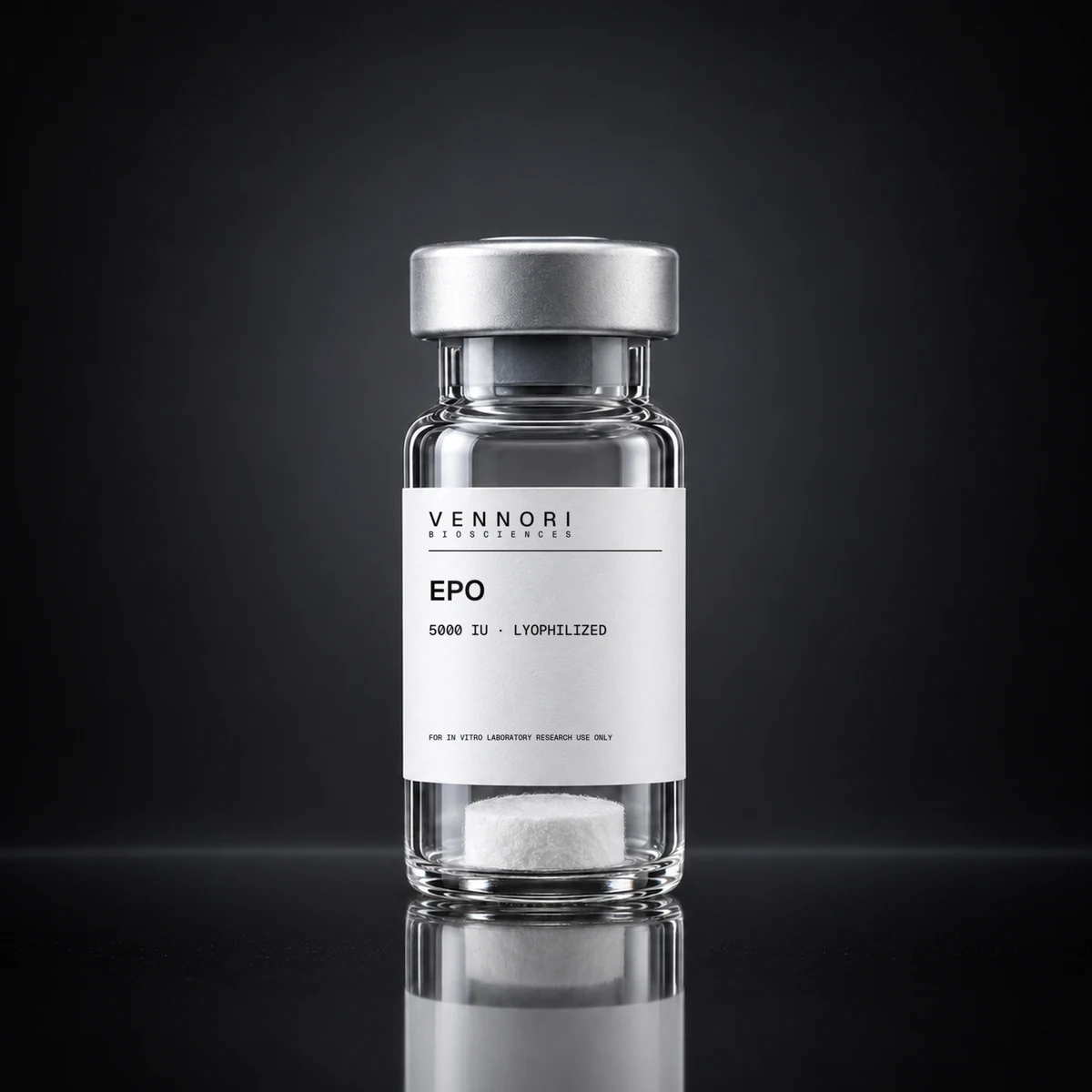
EPO
5000iu · Single vial · Lyophilized powder
Price on release
- Dose
- 5000iu
- Pack size
- Single vial
- Form
- Lyophilized powder
- Storage
- 2–8°C
In vitro laboratory research use only · Not for human or veterinary use · Batch documented · Third-party tested · Ships from Canada
§ Research
Research · EPO
Overview
Erythropoietin (EPO) is a 165-amino-acid glycoprotein hormone produced mainly by peritubular interstitial cells of the kidney in response to tissue hypoxia. It carries three N-linked and one O-linked glycan chains whose sialic acid content governs circulating half-life. The human gene was cloned by Amgen researchers in 1985, enabling recombinant production in mammalian cells. Recombinant EPO is approved for clinical use in several jurisdictions and serves as a reference cytokine in erythropoiesis research.
Mechanism of action
Binds the erythropoietin receptor, a class I cytokine receptor expressed on erythroid progenitors (CFU-E and proerythroblasts) in the bone marrow. Ligand binding reorients a pre-formed receptor homodimer, activating receptor-associated JAK2 kinase, which phosphorylates STAT5 and engages PI3K/Akt and MAPK pathways. These signals suppress apoptosis of erythroid progenitors and promote their proliferation and differentiation into reticulocytes. Endogenous EPO production is regulated by hypoxia-inducible factors (HIF-2 alpha), which are stabilized under low oxygen tension. Non-hematopoietic receptor expression in neural and vascular tissue has been characterized in preclinical research, including studies of cytoprotective signaling in neural and cardiac tissue.
Key research findings
- 01
Molecular cloning and expression studies isolated the human erythropoietin gene and demonstrated that the recombinant glycoprotein is biologically active in vitro and in vivo.
- 02
Physiological studies characterized the oxygen-sensing feedback loop linking renal hypoxia, EPO gene transcription, and red cell mass.
- 03
Large clinical trials in participants with chronic kidney disease characterized hemoglobin responses and documented safety signals including hypertension and thrombotic events at higher hemoglobin targets.
- 04
Anti-doping research has characterized analytical methods distinguishing recombinant from endogenous EPO by isoelectric focusing of glycoform patterns.
Published references
Cloning and expression of the human erythropoietin gene
Erythropoietin: structure, control of production, and function
The information above is derived from published preclinical and clinical research. It is provided for educational purposes only and does not constitute medical advice, diagnosis, or treatment recommendations.