Coming soon
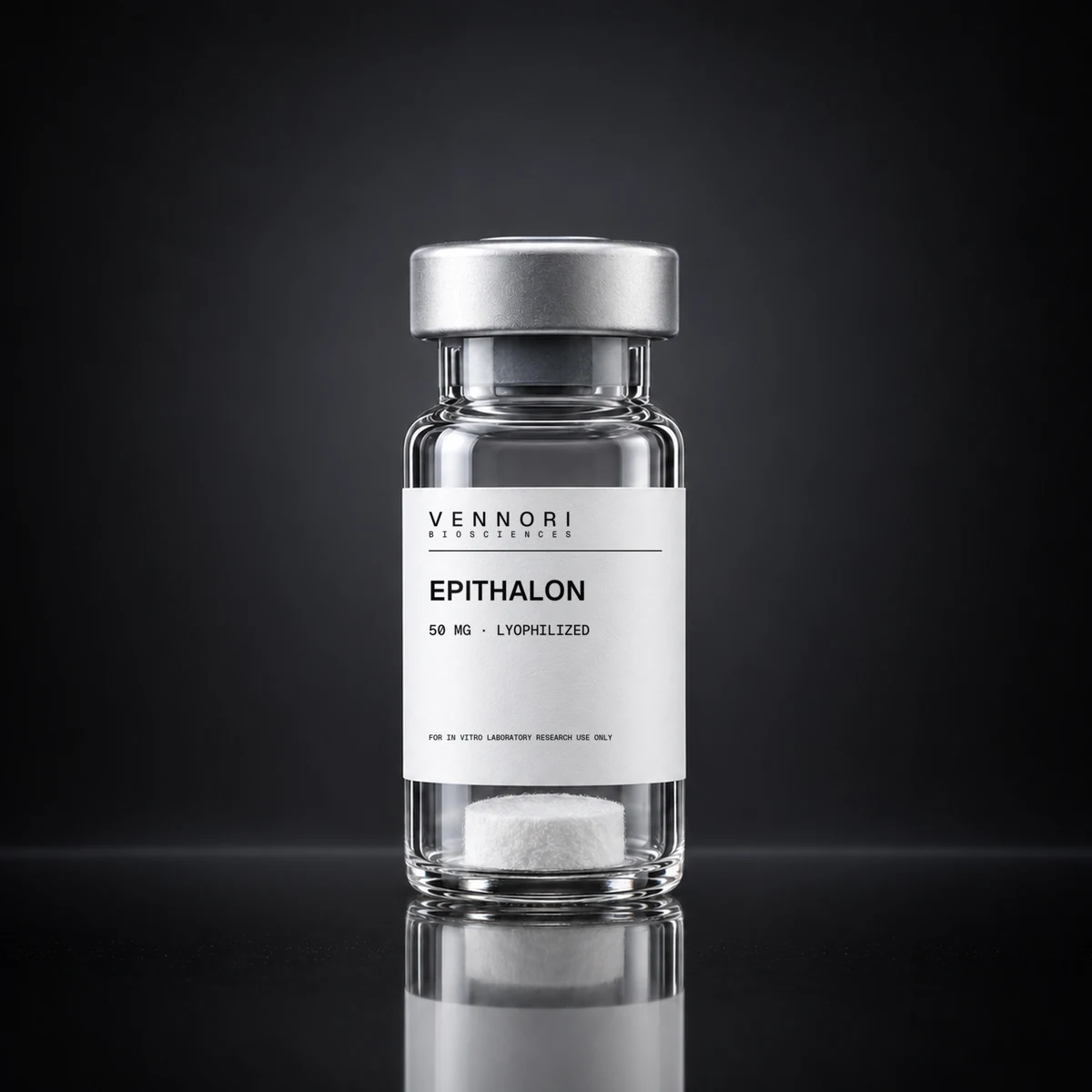
Epithalon
50mg · Single vial · Lyophilized powder
- Dose
- 50mg
- Pack size
- Single vial
- Form
- Lyophilized powder
- Storage
- 2–8°C
In vitro laboratory research use only · Not for human or veterinary use · Batch documented · Third-party tested · Ships from Canada
§ Research
Research · Epithalon
Overview
Epithalon is a synthetic four-residue sequence (Ala-Glu-Asp-Gly) developed by Vladimir Khavinson's group at the St. Petersburg Institute of Bioregulation and Gerontology. It was designed to reproduce the reported activity of epithalamin, a low-molecular-weight extract of bovine pineal tissue. The compound is studied primarily as a research tool in cellular senescence, telomere biology, and pineal gland physiology, and is frequently described in the literature as a short bioregulator. Independent laboratories in the United Kingdom and China have more recently examined its effects in human cell lines and mammalian oocytes, providing a small body of data outside the originating group.
Mechanism of action
The most frequently reported mechanism involves upregulation of hTERT expression and telomerase activity, with associated telomere elongation in cultured somatic cells. Khavinson's group has proposed that the sequence enters the nucleus and interacts with specific DNA promoter regions and histone proteins, modulating chromatin condensation and gene transcription; this epigenetic model remains proposed rather than structurally confirmed. Additional reports describe antioxidant activity, reductions in intracellular reactive oxygen species, and modulation of melatonin-related circadian signaling in pineal cell cultures. Independent verification of the nuclear-binding model by groups outside the originating institute remains limited.
Key research findings
- 01
In vitro work in human breast cancer lines and normal epithelial and fibroblast cells reported dose-dependent telomere length extension, attributed to hTERT and telomerase upregulation in normal cells and to alternative lengthening of telomeres (ALT) activity in some cancer lines.
- 02
Mouse oocyte studies characterized reduced reactive oxygen species, fewer spindle defects, and preserved mitochondrial membrane potential during post-ovulatory aging in vitro.
- 03
Rodent lifespan studies from the originating group reported effects on survival curves and spontaneous tumor incidence under differing illumination regimes.
- 04
Primary research is published in Russian-language journals and remains uncharacterized in Western clinical databases.
Published references
Epitalon increases telomere length in human cell lines through telomerase upregulation or ALT activity
Epitalon protects against post-ovulatory aging-related damage of mouse oocytes in vitro
The information above is derived from published preclinical and clinical research. It is provided for educational purposes only and does not constitute medical advice, diagnosis, or treatment recommendations.