Certivos verified
Analycor Laboratories
Independent Analysis
- Purity
- 99.8%
- Method
- HPLC + LC-MS
- Test date
- 2026-11-05
3U8G2MQ45JCG→ View certificate
This site supplies research compounds and laboratory materials for in vitro research only. Not for human or veterinary use.
I confirm I am 21 years of age or older and that any purchase is for laboratory research use only.
UP TO 30% OFF Retatrutide · Semaglutide — Limited TimeShop now
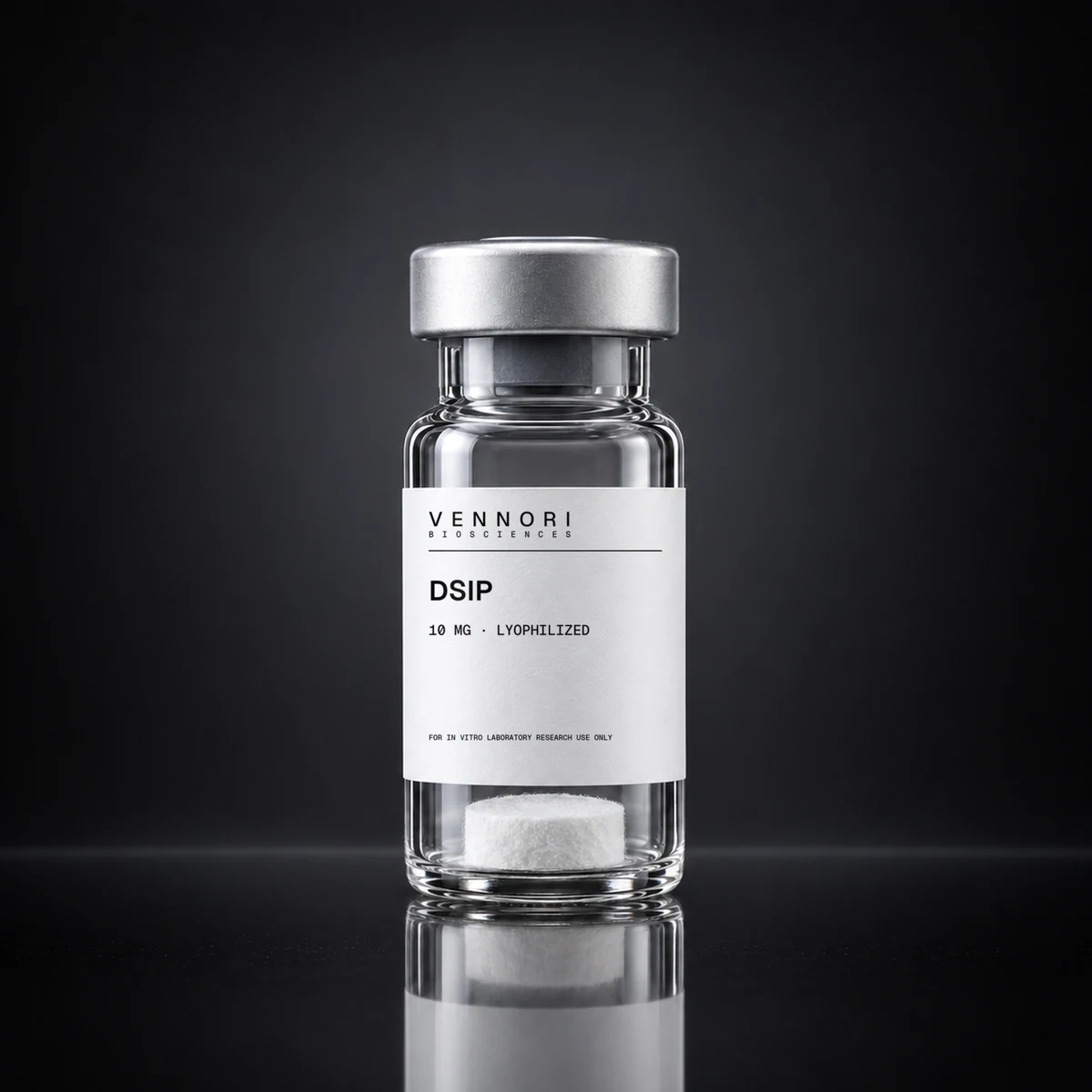
In stock
10mg · Single vial · Lyophilized powder
Order
No crypto required. Pay with Visa, Mastercard, Amex, Apple Pay, Google Pay, or Interac.






In vitro laboratory research use only · Not for human or veterinary use · Batch documented · Third-party tested · Ships from Canada
§ Verification — Batch DS10-202611-01
Analycor Laboratories
Independent Analysis
Certificates are issued and hosted by Certivos.
§ Research
DSIP, a nine-residue sequence first isolated from rabbit cerebral venous blood, has the structure Trp-Ala-Gly-Gly-Asp-Ala-Ser-Gly-Glu. It was identified in 1977 by Schoenenberger and Monnier during electrical stimulation of the thalamic intralaminar region in sleeping donor animals. Immunoreactive material has since been detected in mammalian plasma, cerebrospinal fluid, hypothalamus, pituitary, and gut. It is studied as a reference compound in sleep regulation, thermoregulation, and stress-response research. Despite decades of study, its physiological role remains debated, and it has been described in review literature as an unresolved puzzle of neuroendocrinology.
No specific receptor or encoding gene for DSIP has been conclusively identified, and its mechanism remains unresolved. Proposed actions include modulation of GABAergic and glutamatergic (NMDA) transmission, interaction with opioid systems, and effects on hypothalamic-pituitary signaling, including reported changes in luteinizing hormone, corticotropin, and somatostatin release. The sequence is rapidly degraded in plasma, though it has been reported to cross the blood-brain barrier by a saturable process and to circulate in free and bound forms. A phosphorylated variant has been described with distinct activity profiles. Its effects appear highly dependent on circadian timing, dose, and species, which has complicated mechanistic interpretation and replication across laboratories.
Early rabbit and rodent studies characterized changes in slow-wave (delta) EEG activity following central administration, though replication across laboratories was inconsistent.
Analytical studies document the presence of DSIP in free form in mammalian plasma, human cerebrospinal fluid, and urine.
Rodent models characterize effects on thermoregulation, including attenuation of amphetamine-induced hyperthermia.
Small clinical investigations in the 1980s characterized sleep-architecture endpoints in participants with disturbed sleep, with mixed results.
DSIP--a tool for investigating the sleep onset mechanism: a review
DSIP occurs in free form in mammalian plasma, human CSF and urine
The information above is derived from published preclinical and clinical research. It is provided for educational purposes only and does not constitute medical advice, diagnosis, or treatment recommendations.