Coming soon
Cerebrolysin
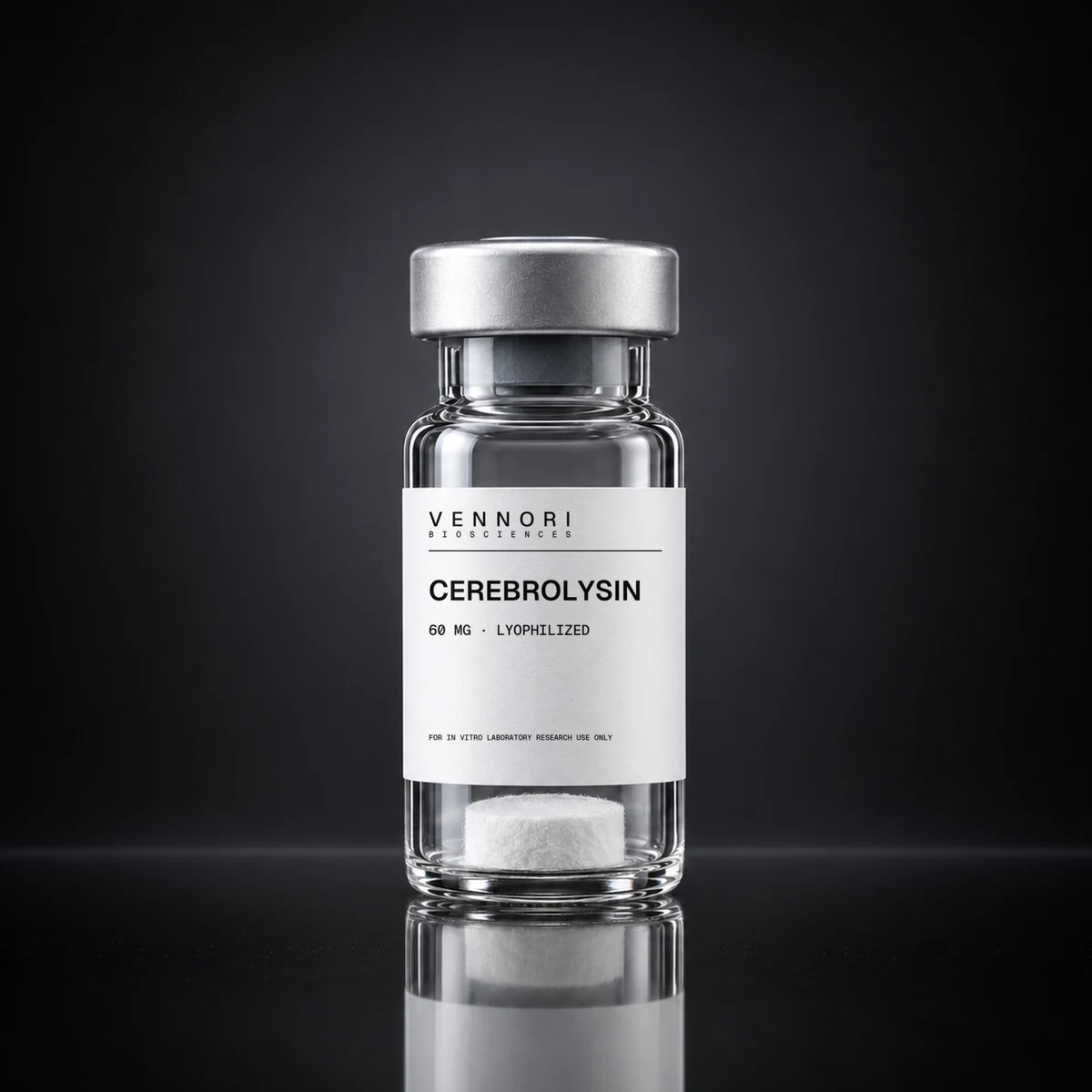
60mg · Single vial · Lyophilized powder
- Dose
- 60mg
- Pack size
- Single vial
- Form
- Lyophilized powder
- Storage
- 2–8°C
In vitro laboratory research use only · Not for human or veterinary use · Batch documented · Third-party tested · Ships from Canada
§ Research
Research · Cerebrolysin
Overview
Cerebrolysin is a porcine brain-derived preparation produced by standardized enzymatic breakdown of lipid-free brain protein, yielding a mixture of low-molecular-weight fractions and free amino acids. Its composition is not a single defined molecule, and biological activity is attributed to fragments with reported neurotrophic factor-like properties. It is approved for clinical use in several jurisdictions and is widely studied as a reference preparation in stroke, traumatic brain injury, and neurodegeneration research. Its production process is designed to retain fractions below roughly ten kilodaltons, and batch-to-batch standardization relies on bioassay and chromatographic profiling rather than a single active ingredient.
Mechanism of action
Proposed mechanisms reflect the mixed composition of the preparation. Fragments within the mixture are reported to mimic aspects of endogenous neurotrophic factors, including brain-derived neurotrophic factor, ciliary neurotrophic factor, and nerve growth factor signaling. Preclinical studies describe reduced excitotoxic and calpain-mediated damage, modulation of microglial activation, and support of neurogenesis and synaptic plasticity. In amyloid models, reported effects include modulation of amyloid precursor protein processing via GSK-3beta and CDK5 kinase pathways. Because it is a complex mixture, attribution of individual effects to specific components remains incompletely characterized. Reported downstream signaling includes activation of the Sonic hedgehog pathway in rodent stroke models.
Key research findings
- 01
Cell-culture and rodent studies characterize neurotrophic-like activity, including effects on neuronal survival, neurite outgrowth, and synaptic markers.
- 02
Randomized clinical trials in acute ischaemic stroke have been pooled in Cochrane systematic reviews assessing mortality and adverse-event endpoints.
- 03
Clinical studies in traumatic brain injury and subarachnoid hemorrhage have characterized functional outcome scales in participants receiving the preparation.
- 04
Transgenic amyloid models characterize effects on amyloid deposition and synaptic density associated with altered kinase signaling.
Published references
Cerebrolysin for stroke, neurodegeneration, and traumatic brain injury: review of the literature and outcomes
Cerebrolysin for acute ischaemic stroke
The information above is derived from published preclinical and clinical research. It is provided for educational purposes only and does not constitute medical advice, diagnosis, or treatment recommendations.