Coming soon
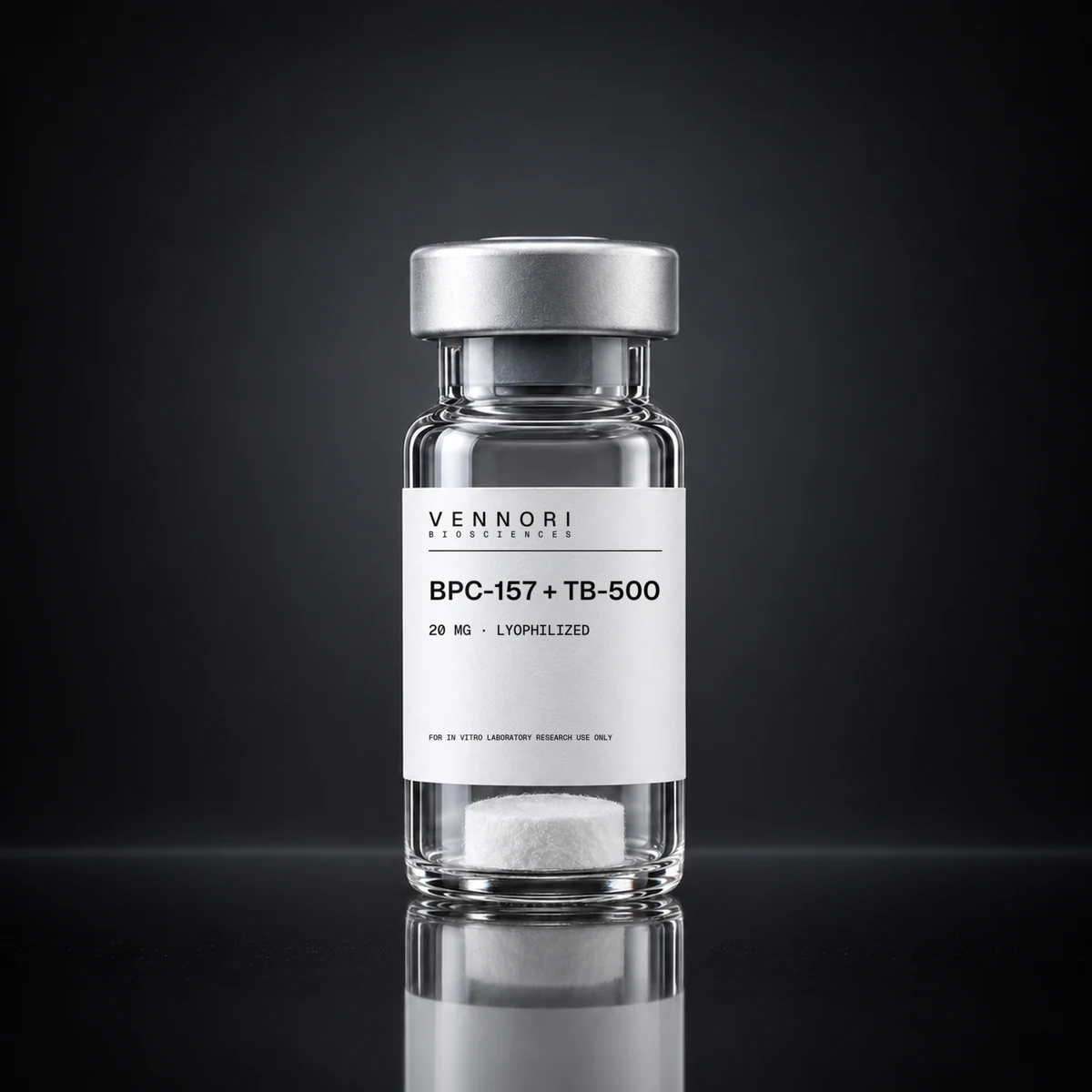
BPC-157 + TB-500
20mg · Single vial · Lyophilized powder
- Dose
- 20mg
- Pack size
- Single vial
- Form
- Lyophilized powder
- Storage
- 2–8°C
In vitro laboratory research use only · Not for human or veterinary use · Batch documented · Third-party tested · Ships from Canada
§ Research
Research · BPC-157 + TB-500
Overview
This product is a combination of two distinct synthetic research compounds: BPC-157, a 15-residue fragment of a protein originally described in human gastric juice, and TB-500, an N-terminally acetylated seven-residue sequence (Ac-LKKTETQ) corresponding to residues 17-23 of thymosin beta-4. Each component has its own separate preclinical literature, primarily in rodent models of soft tissue injury and repair. Neither component has regulatory approval in any jurisdiction, and the combination is supplied for research purposes only.
Mechanism of action
The two components are proposed to act through distinct pathways. BPC-157 has no identified high-affinity receptor; preclinical studies associate it with modulation of the nitric oxide system, increased VEGFR2 expression with Akt-eNOS signaling, and activation of the FAK-paxillin pathway in tendon fibroblasts. TB-500 contains the central actin-binding motif of thymosin beta-4, which in the full-length protein binds monomeric G-actin and regulates cytoskeletal dynamics and cell migration. Whether the isolated TB-500 fragment reproduces the full protein's signaling activity has not been established, and no interaction between the two components at the pathway level has been characterized.
Key research findings
- 01
BPC-157 has been characterized in rodent models of tendon, ligament, gastrointestinal, and vascular injury, largely by a single research group.
- 02
TB-500 literature is dominated by doping-control analytical methods; most mechanistic data describe full-length thymosin beta-4 rather than the fragment.
- 03
The combination has not been characterized as a single entity in peer-reviewed studies; one 2026 rat Achilles tendon study included a co-administration arm and reported no additive effect over either component alone.
- 04
Both components appear on the World Anti-Doping Agency prohibited list, and controlled human data for either component are absent.
Published references
BPC 157 and blood vessels
Effects of BPC-157 and TB-500 on Achilles tendon healing in rats: A histopathological and biomechanical study
Synthesis and characterization of the N-terminal acetylated 17-23 fragment of thymosin beta 4 identified in TB-500, a product suspected to possess doping potential
The information above is derived from published preclinical and clinical research. It is provided for educational purposes only and does not constitute medical advice, diagnosis, or treatment recommendations.