Coming soon
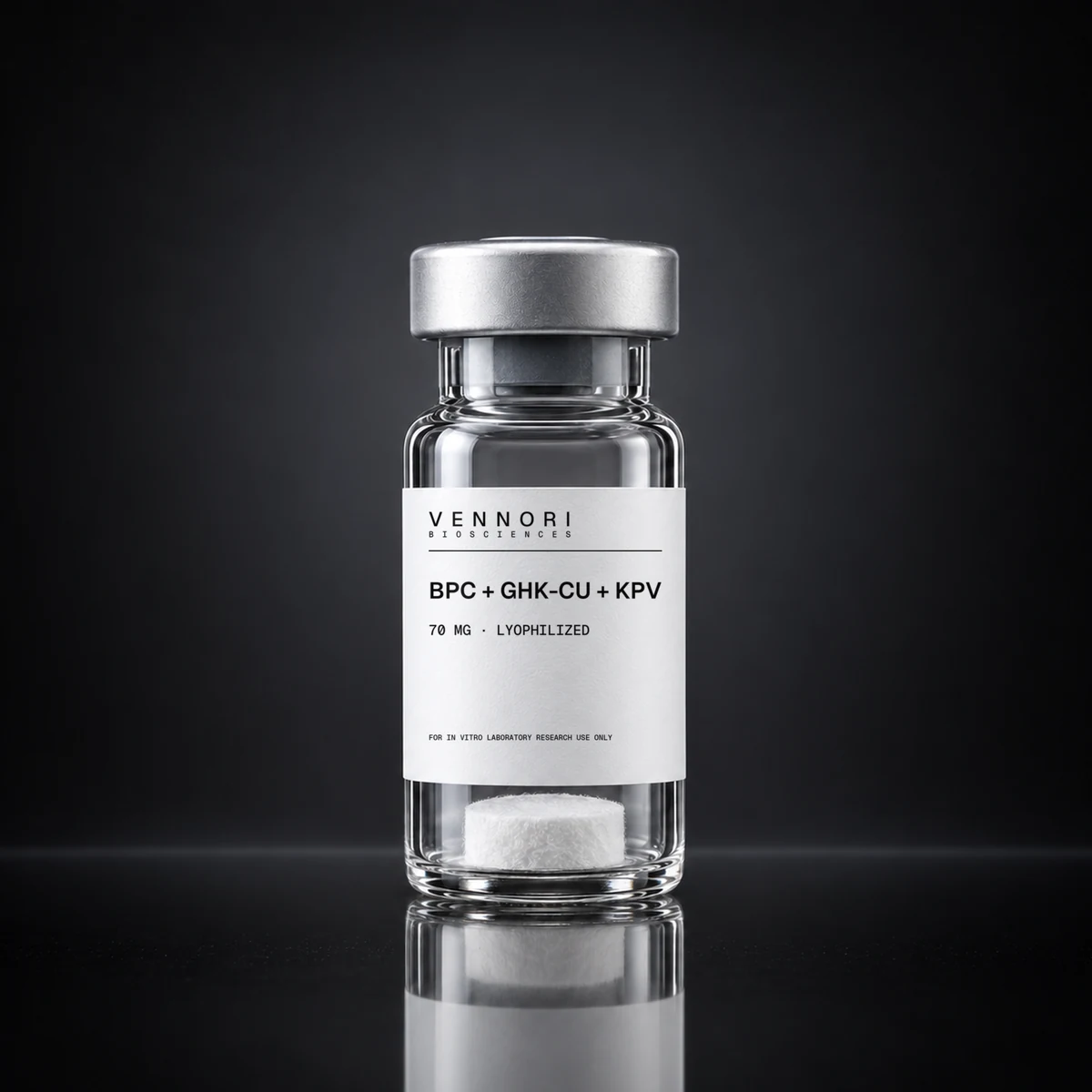
BPC + GHK-Cu + KPV
70mg · Single vial · Lyophilized powder
- Dose
- 70mg
- Pack size
- Single vial
- Form
- Lyophilized powder
- Storage
- 2–8°C
In vitro laboratory research use only · Not for human or veterinary use · Batch documented · Third-party tested · Ships from Canada
§ Research
Research · BPC + GHK-Cu + KPV
Overview
BPC + GHK-Cu + KPV is a research combination of three independently studied compounds. BPC-157 is a synthetic 15-residue sequence derived from a protein fraction originally isolated from human gastric juice. GHK-Cu is the copper(II) complex of the endogenous Gly-His-Lys sequence, first identified in the albumin fraction of human plasma. KPV is the Lys-Pro-Val fragment corresponding to residues 11 to 13 at the C-terminus of alpha-melanocyte-stimulating hormone (alpha-MSH). The blend is supplied for laboratory investigation of tissue-repair and inflammatory-signaling pathways.
Mechanism of action
Each component acts through a distinct pathway. BPC-157 has been reported to interact with the nitric oxide system and to modulate VEGFR2 expression, FAK-paxillin signaling, and growth-factor-associated gene expression in endothelial and fibroblast models. GHK-Cu binds copper(II) with high affinity and is proposed to act as a copper-delivery and signaling complex, with gene-expression analyses indicating modulation of transcripts involved in extracellular matrix synthesis, antioxidant defense, and tissue remodeling. KPV retains the anti-inflammatory activity of the alpha-MSH C-terminus, inhibiting NF-kB activation and pro-inflammatory cytokine production in epithelial and immune cell models; it is taken up by the intestinal PepT1 transporter.
Key research findings
- 01
Preclinical rodent studies of BPC-157 characterize effects on angiogenesis, vascular collateral recruitment, and tissue-repair endpoints in gastrointestinal, tendon, and vascular injury models.
- 02
In vitro and gene-expression studies of GHK-Cu document modulation of collagen and glycosaminoglycan synthesis and broad changes in transcript profiles in human cell lines.
- 03
In vitro assays in human keratinocytes and murine colitis models characterize KPV-associated reductions in NF-kB signaling and inflammatory markers.
- 04
The combination itself has not been characterized as a single entity in peer-reviewed studies; available data derive from investigations of each component individually.
Published references
BPC 157 and blood vessels
GHK and DNA: resetting the human genome to health
alpha-Melanocyte-stimulating hormone, MSH 11-13 KPV and adrenocorticotropic hormone signalling in human keratinocyte cells
The information above is derived from published preclinical and clinical research. It is provided for educational purposes only and does not constitute medical advice, diagnosis, or treatment recommendations.