Certivos verified
Janoshik Analytical
Independent Analysis
- Test date
- 2026-06-05
NBADK5EP8VN2→ View certificate
This site supplies research compounds and laboratory materials for in vitro research only. Not for human or veterinary use.
I confirm I am 21 years of age or older and that any purchase is for laboratory research use only.
UP TO 30% OFF Retatrutide · Semaglutide · Tirzepatide — Limited TimeShop now
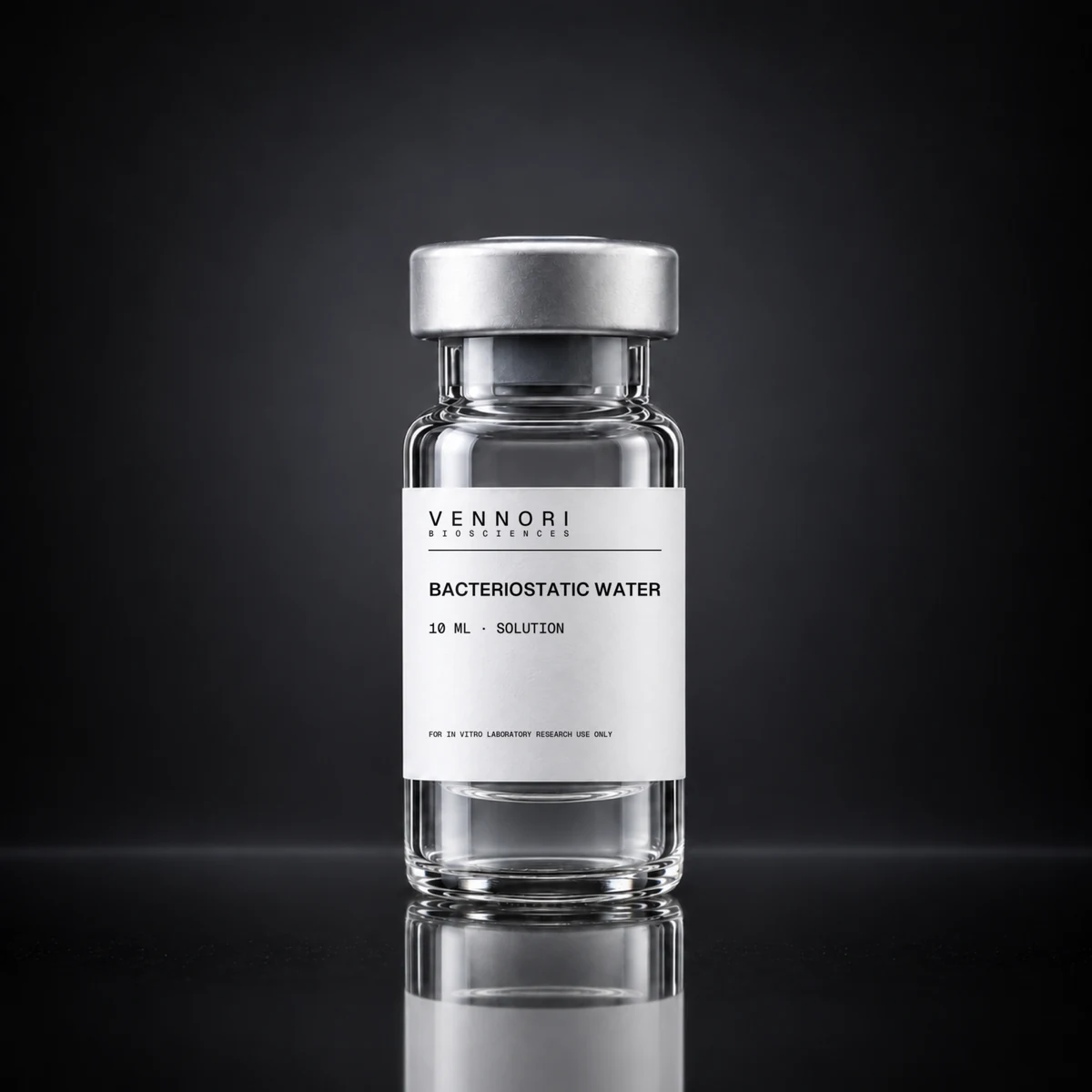
In stock
10ml · Single vial · Solution
Order
No crypto required. Pay with Visa, Mastercard, Amex, Apple Pay, Google Pay, or Interac.






In vitro laboratory research use only · Not for human or veterinary use · Batch documented · Third-party tested · Ships from Canada
§ Verification — Batch 2026-05
Janoshik Analytical
Independent Analysis
Certificates are issued and hosted by Certivos.
§ Research
Bacteriostatic Water is sterile water containing benzyl alcohol as an antimicrobial preservative. It is used in laboratory settings as a diluent for lyophilized reagents where a multiple-use container is required. Benzyl alcohol (phenylmethanol) is an aromatic alcohol with moderate water solubility that is widely used as a preservative in pharmaceutical and cosmetic formulations and has been the subject of formal safety assessments. The preservative distinguishes it from plain sterile water, which contains no antimicrobial agent and is intended for single use.
Benzyl alcohol acts as a bacteriostatic agent by partitioning into microbial cell membranes, increasing membrane fluidity and permeability and disrupting membrane-associated functions, which inhibits growth of many bacteria at the concentrations used for preservation rather than producing rapid sterilization. Its presence limits proliferation of microorganisms introduced during repeated entry into a container. In mammalian systems it is oxidized to benzaldehyde and then benzoic acid, which is conjugated with glycine to form hippuric acid and eliminated renally. This conjugation capacity is limited in neonatal models. Because benzyl alcohol is reactive toward some dissolved solutes, compatibility with a given reagent is typically evaluated before use as a diluent.
Formal safety assessments have reviewed toxicology, metabolism, and sensitization data for benzyl alcohol, benzoic acid, and related benzyl compounds as formulation ingredients.
Clinical case reports from the early 1980s linked benzyl alcohol-preserved solutions to a fatal gasping syndrome in neonates, attributed to accumulation of benzoic acid.
Neonatal and adult mouse studies characterized age-dependent differences in benzyl alcohol toxicity.
Formulation studies have characterized interactions between benzyl alcohol and dissolved proteins, including increased aggregation of some monoclonal antibodies under stress conditions.
Safety Assessment of Benzyl Alcohol, Benzoic Acid and its Salts, and Benzyl Benzoate
The gasping syndrome and benzyl alcohol poisoning
The information above is derived from published preclinical and clinical research. It is provided for educational purposes only and does not constitute medical advice, diagnosis, or treatment recommendations.