Coming soon
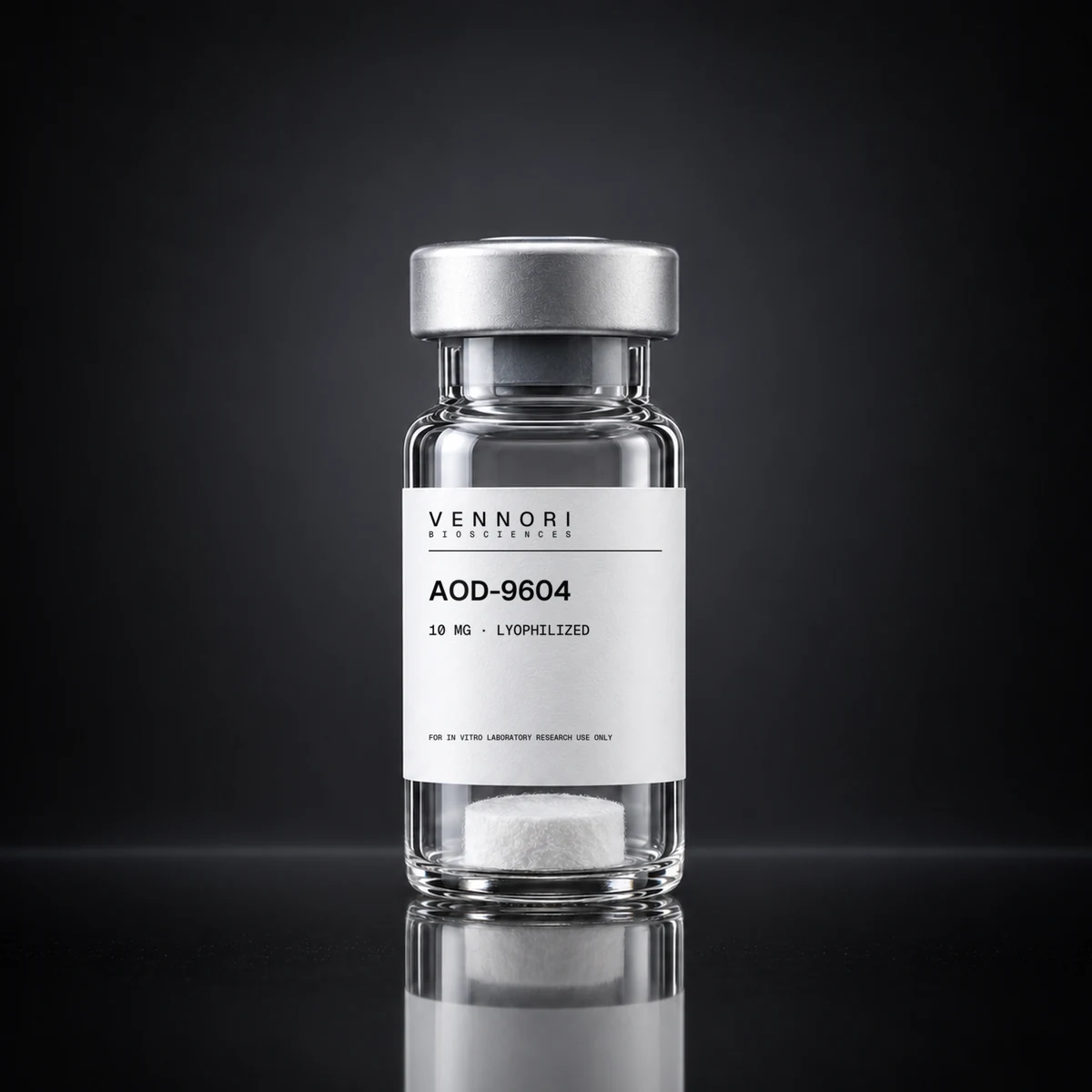
AOD-9604
10mg · Single vial · Lyophilized powder
- Dose
- 10mg
- Pack size
- Single vial
- Form
- Lyophilized powder
- Storage
- 2–8°C
In vitro laboratory research use only · Not for human or veterinary use · Batch documented · Third-party tested · Ships from Canada
§ Research
Research · AOD-9604
Overview
AOD-9604 is a synthetic 16-residue fragment corresponding to the C-terminal region of human growth hormone (residues 177 to 191) with an additional N-terminal tyrosine. It was developed in Australia by Metabolic Pharmaceuticals to isolate the lipolytic activity attributed to this region of the growth hormone molecule from its growth-promoting and diabetogenic actions. The fragment does not bind the growth hormone receptor in a manner that drives IGF-1 production, and it is studied as a research tool for adipose tissue lipid metabolism.
Mechanism of action
The proposed mechanism centers on direct effects on adipocyte lipid handling rather than growth hormone receptor signaling. In rodent adipose tissue, the fragment has been reported to stimulate lipolysis and inhibit lipogenesis, and chronic exposure has been associated with increased expression of beta-3 adrenergic receptors in adipocytes. Studies in beta-3 adrenergic receptor knockout mice were used to examine whether these metabolic effects depend on that receptor. Unlike intact growth hormone, the fragment has not been reported to raise circulating IGF-1 or impair insulin sensitivity in the models studied.
Key research findings
- 01
Rodent metabolic studies characterized effects on adipose tissue lipolysis and lipogenesis, body fat, and energy balance without changes in IGF-1 or glucose tolerance.
- 02
Chronic exposure studies in genetically hyperphagic (ob/ob) mice and beta-3 adrenergic receptor knockout mice compared the fragment with intact growth hormone on lipid metabolism endpoints.
- 03
A rabbit osteoarthritis model characterized cartilage and joint endpoints following intra-articular administration, alone and with hyaluronic acid.
- 04
Analytical chemistry studies have characterized detection methods and in vitro metabolism of the fragment for anti-doping research; phase 2 clinical development by the original developer was discontinued.
Published references
Metabolic studies of a synthetic lipolytic domain (AOD9604) of human growth hormone
The effects of human GH and its lipolytic fragment (AOD9604) on lipid metabolism following chronic treatment in obese mice and beta(3)-AR knock-out mice
The information above is derived from published preclinical and clinical research. It is provided for educational purposes only and does not constitute medical advice, diagnosis, or treatment recommendations.