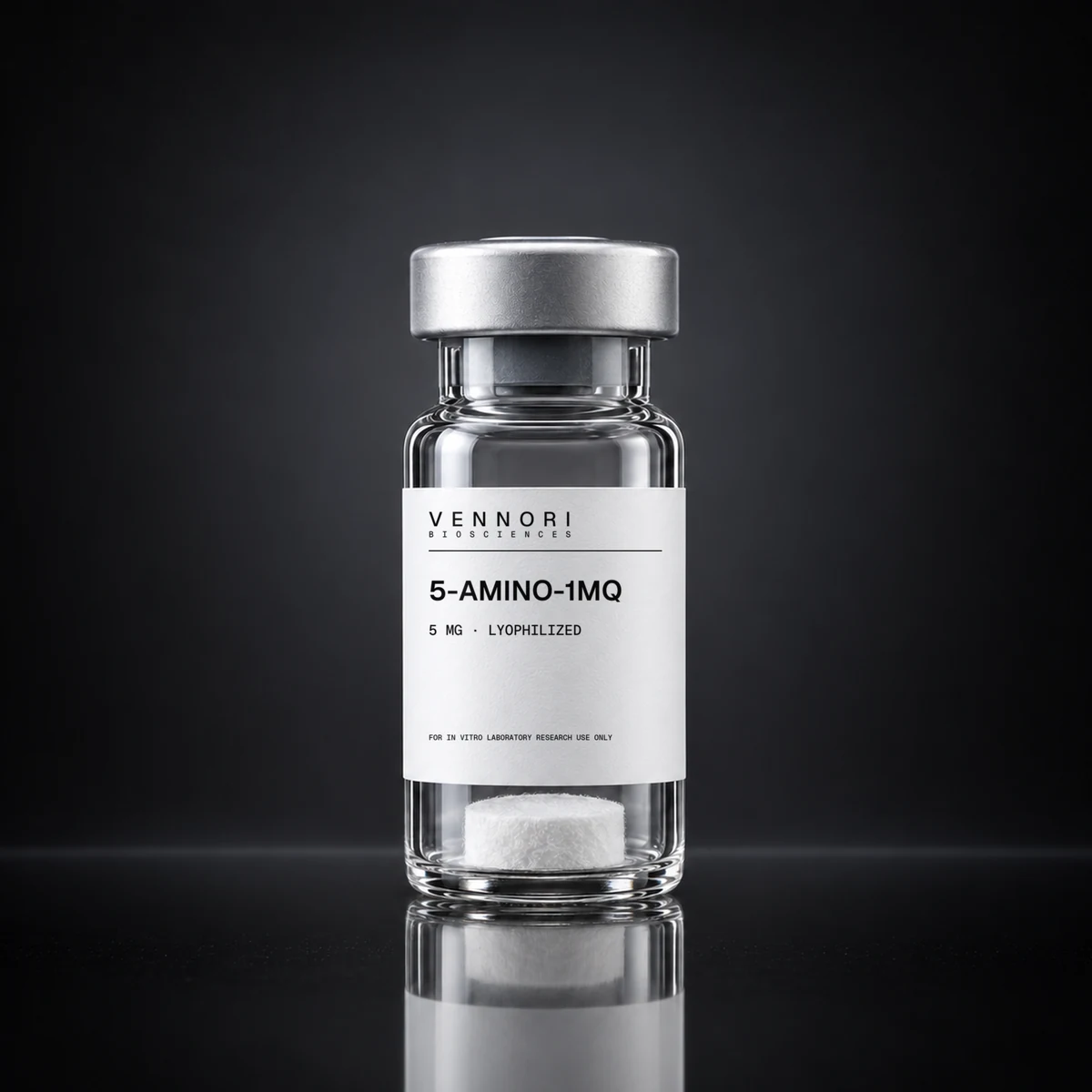
Coming soon
5-Amino-1MQ
5mg · Single vial · Lyophilized powder
- Dose
- 5mg
- Pack size
- Single vial
- Form
- Lyophilized powder
- Storage
- 2–8°C
In vitro laboratory research use only · Not for human or veterinary use · Batch documented · Third-party tested · Ships from Canada
§ Research
Research · 5-Amino-1MQ
Overview
5-Amino-1MQ (5-amino-1-methylquinolinium) is a small-molecule inhibitor of nicotinamide N-methyltransferase (NNMT), a cytosolic enzyme highly expressed in adipose tissue and liver. It is a methylated quinolinium compound identified through structure-based screening of nicotinamide-like analogs and selected for its membrane permeability and selectivity over related methyltransferases. It is not approved for clinical use and has no published human clinical trials; it is used as a research tool for studying NNMT, NAD+ metabolism, and cellular methylation balance.
Mechanism of action
NNMT transfers a methyl group from S-adenosylmethionine (SAM) to nicotinamide, producing 1-methylnicotinamide and S-adenosylhomocysteine. This reaction diverts nicotinamide away from the NAD+ salvage pathway and consumes cellular methyl donor capacity. By binding the NNMT substrate site, 5-Amino-1MQ reduces 1-methylnicotinamide formation and is associated with increased intracellular NAD+ and SAM levels. Elevated NAD+ is proposed to support sirtuin activity and oxidative metabolism, while altered SAM availability may influence epigenetic methylation in adipocytes and muscle progenitor cells.
Key research findings
- 01
In vitro assays demonstrate selective NNMT inhibition with low cytotoxicity, and studies in cultured adipocytes characterized reduced lipogenesis together with increased intracellular NAD+ and SAM and reduced 1-methylnicotinamide.
- 02
In diet-induced adiposity mouse models, systemic exposure was associated with reduced body weight, white adipose mass, adipocyte size, and plasma cholesterol without changes in food intake.
- 03
Studies in aged mice characterized activation of senescent muscle stem cells, with increased muscle fiber cross-sectional area and contractile force following injury.
- 04
Follow-up rodent studies have examined NNMT inhibition combined with reduced-calorie diets, characterizing metabolic endpoints, adipose tissue composition, and a distinct gut microbiome profile relative to diet alone.
Published references
Selective and membrane-permeable small molecule inhibitors of nicotinamide N-methyltransferase reverse high fat diet-induced obesity in mice
Small molecule nicotinamide N-methyltransferase inhibitor activates senescent muscle stem cells and improves regenerative capacity of aged skeletal muscle
The information above is derived from published preclinical and clinical research. It is provided for educational purposes only and does not constitute medical advice, diagnosis, or treatment recommendations.